skip to main content
✦
Don't forget to complete your donation
✦
complete your donation
Your saved curriculum
✕
Placeholder profile picture with a blue fish illustration
Curriculum name
SaveRemove
Nothing saved yet — tap the bookmark on any curriculum to keep it here.

There's newer information on this page.

Refresh×
← Back to Curriculum
Science
No more grades

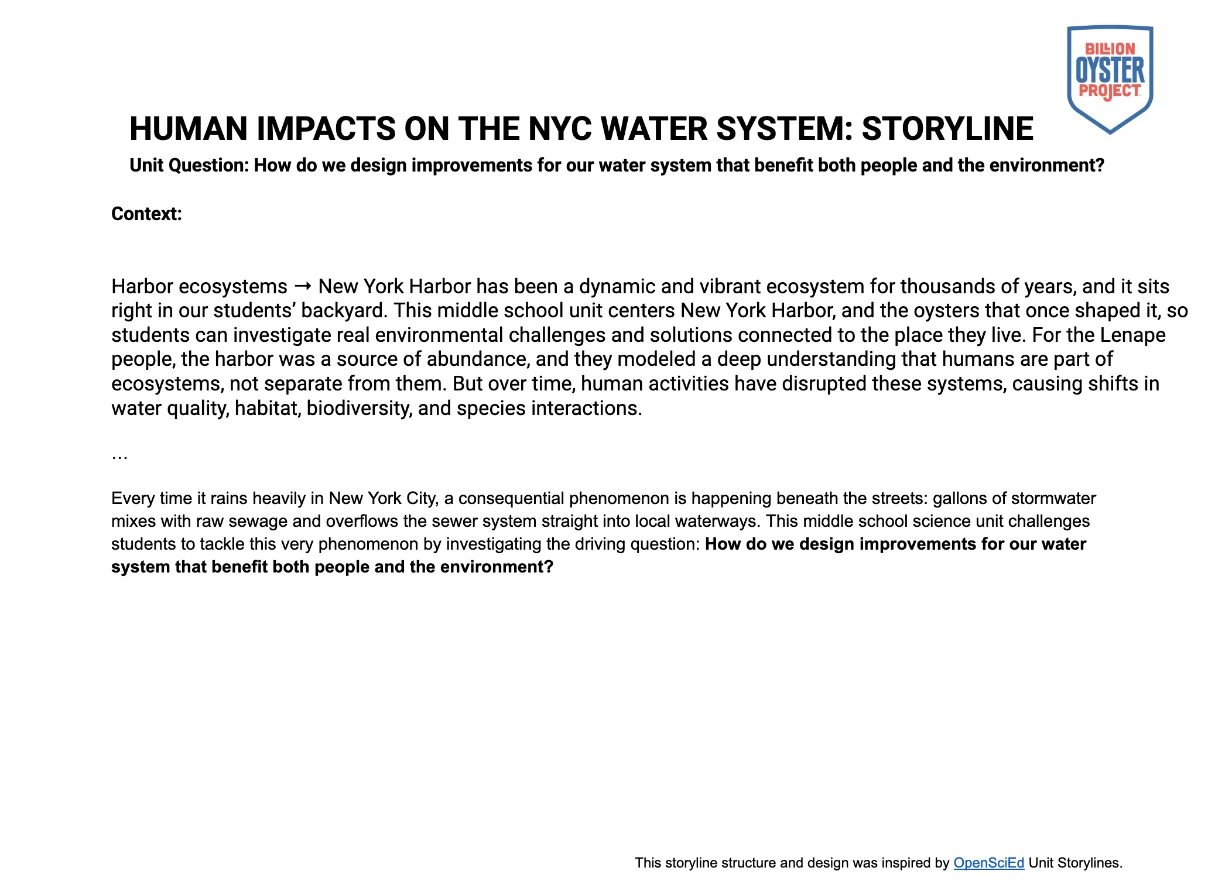
Human Impacts on NYC Water Systems

Unit
16 class periods
Class Periods
1 outdoor lab
Field Visits
Want to bookmark this unit and track your progress?
Sign up for a free Educator Account
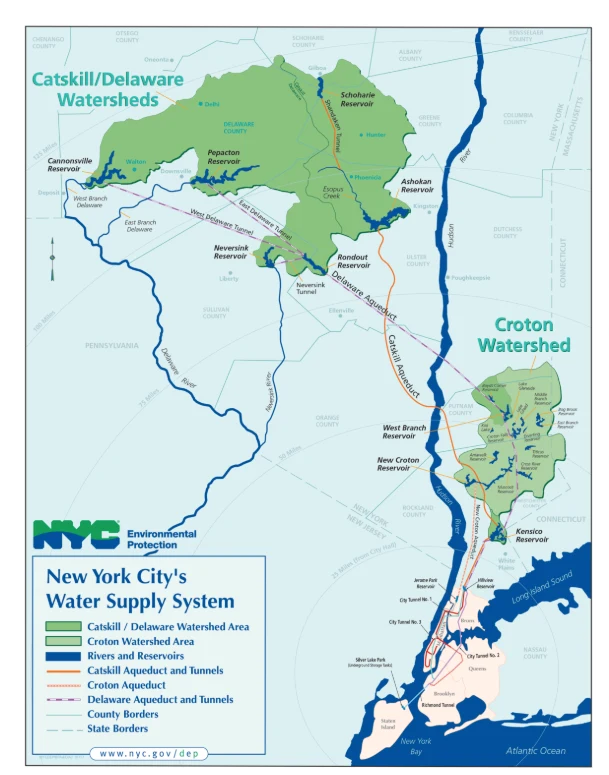
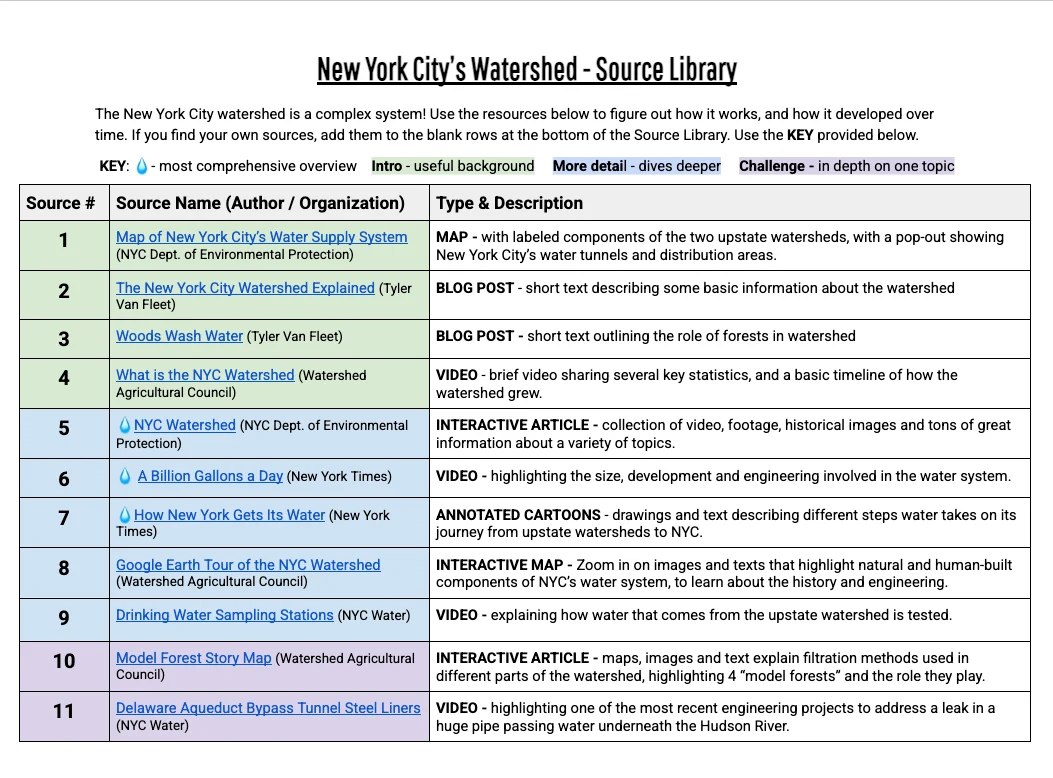
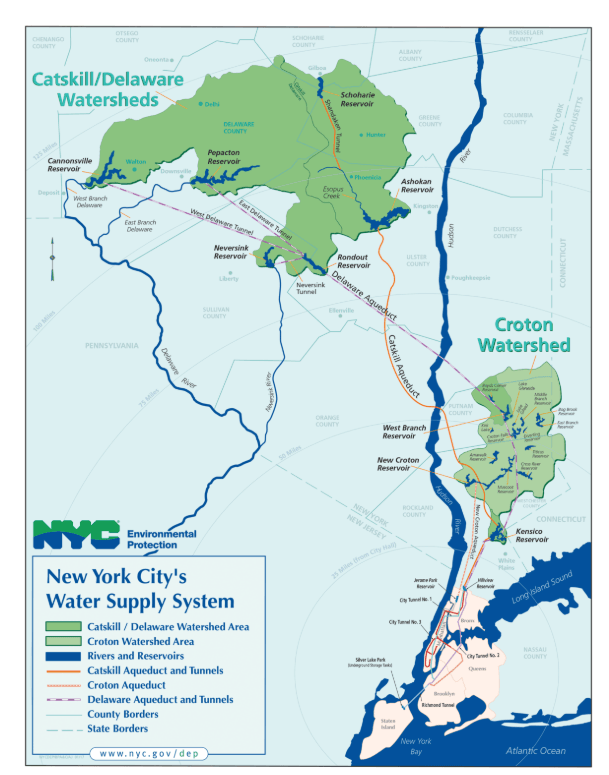
Map of New York City's Water Supply System

Overview

What Students Do

How do we design improvements for our water system that benefit both people and the environment? Throughout 10 lessons, students review the geological processes that made NY what it is and explore the history of NY's watershed, sewershed, and drinking water systems. Through science labs, they explore runoff and then investigate major historical storms and predict the potential future of NY's water systems. Lastly, they learn about various methods of green infrastructure and design a model intended to reduce negative human impact on drinking water or wastewater in New York.

Pacing & Logistics

Pacing: 16 class periods throughout 10 lessons, covering NGSS standards MS-ESS3-1, MS-ESS3-4, MS-ESS3-2, and MS-ESS-3-3.

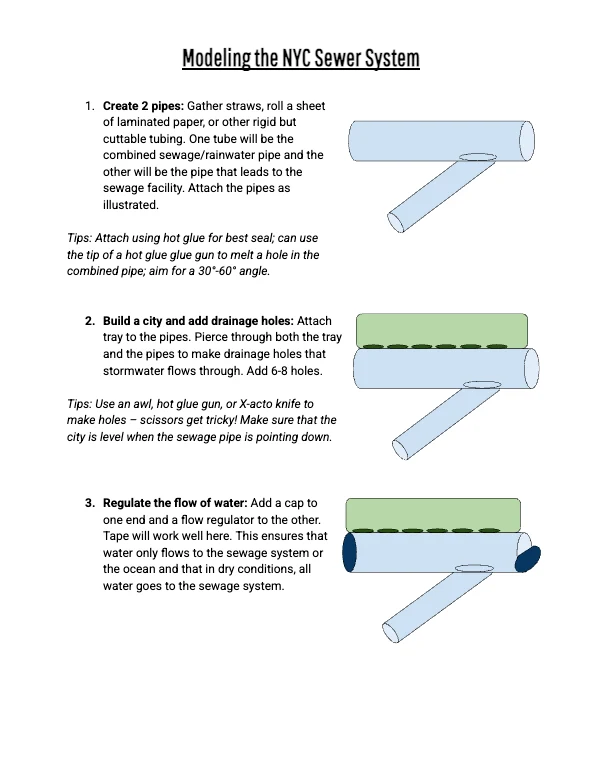
Logistics: Maintain a Class Question Pool (poster paper or whiteboard section) throughout the unit—students return to it repeatedly. Use the unit’s master Slides deck for all 10 lessons. The runoff lab in lesson 6 encourages a visit outside and lesson 7 requires the teacher to build a model of NYC's sewer system out of found materials; the rest is reading, modeling, and discussion.

Field Visits
1 outdoor lab

Learning Standards

No standards assigned to this unit, yet.

Materials

LESSONS

3

chapters

CHAPTER

Chevron pointing right

Lesson

:

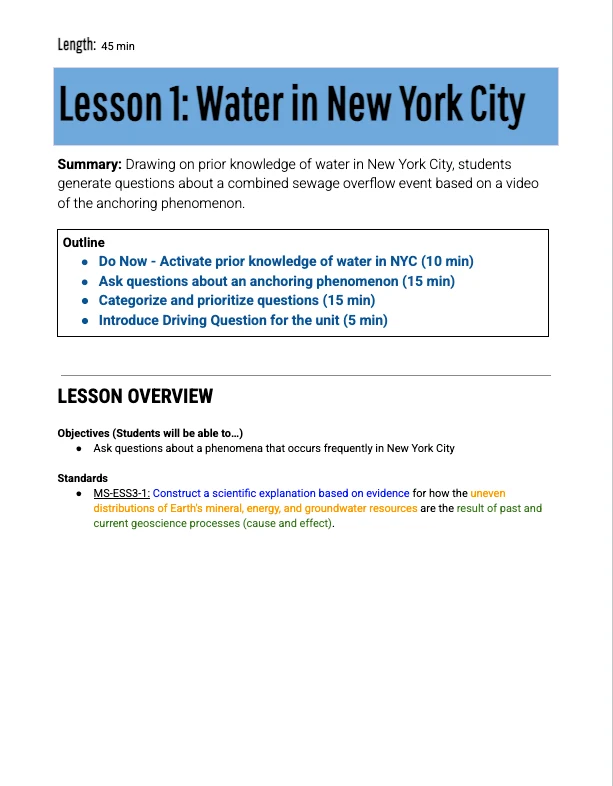
Water in New York City

Document icon with a folded corner and text lines
Length
1 class period
Setting
Classroom
Lesson Question:
What is happening in the combined sewer overflow videos and why?
Lesson Snapshot

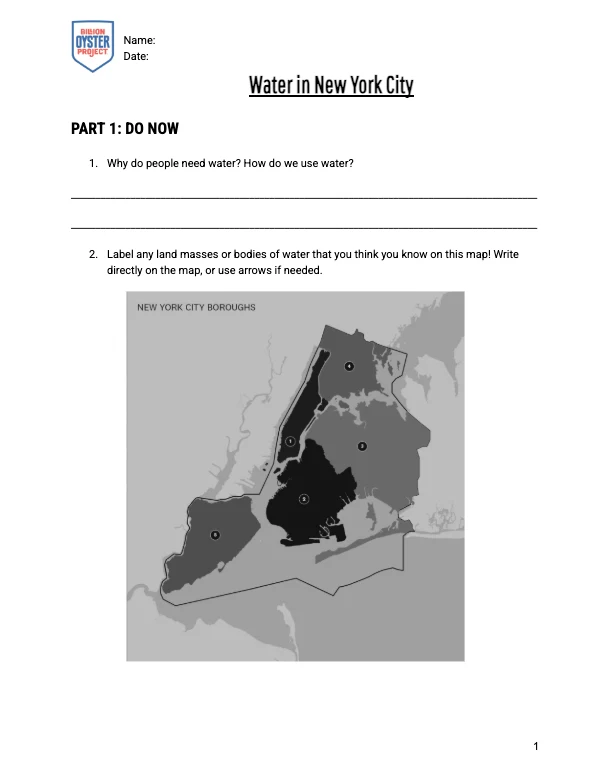
Drawing on prior knowledge of water in New York City, students generate questions about a combined sewage overflow event based on a video of the anchoring phenomenon.

Students will:
  • Ask questions about a phenomenon that occurs frequently in New York City.
Standards
No standards assigned at this time.
Materials & Quick Links

Sign up to access lesson content

Create free teacher credentials to access full lesson plans, downloadable materials, and teaching resources for your classroom.

CHAPTER

Chevron pointing right

Lesson

:

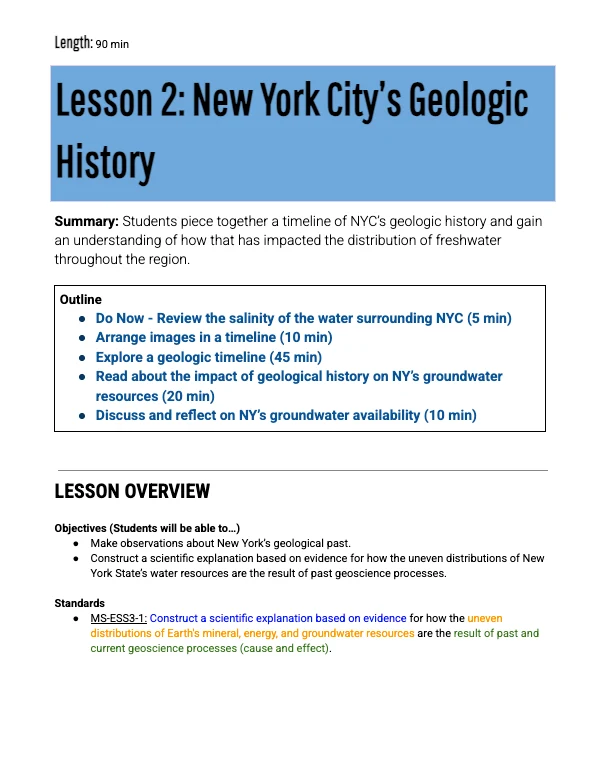
New York City’s Geologic History

Length
2 class periods
Setting
Classroom
Lesson Question:
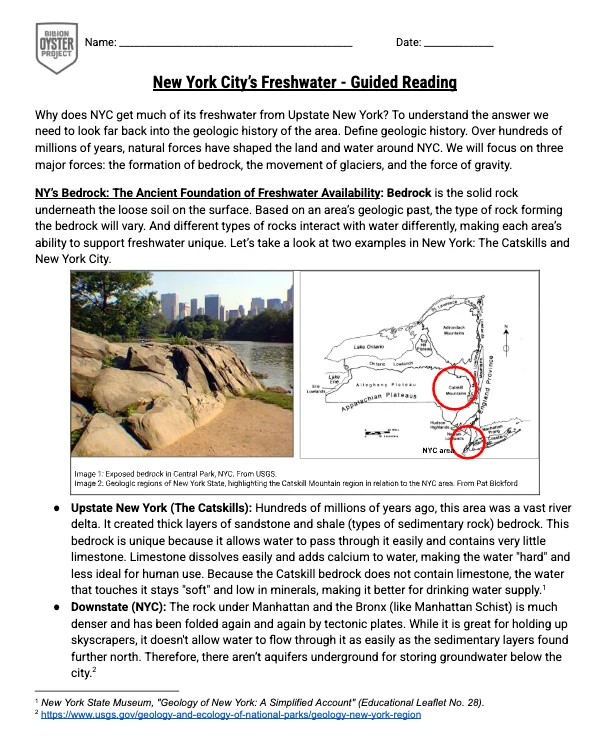
How has geologic history impacted water distribution in NY state?
Lesson Snapshot

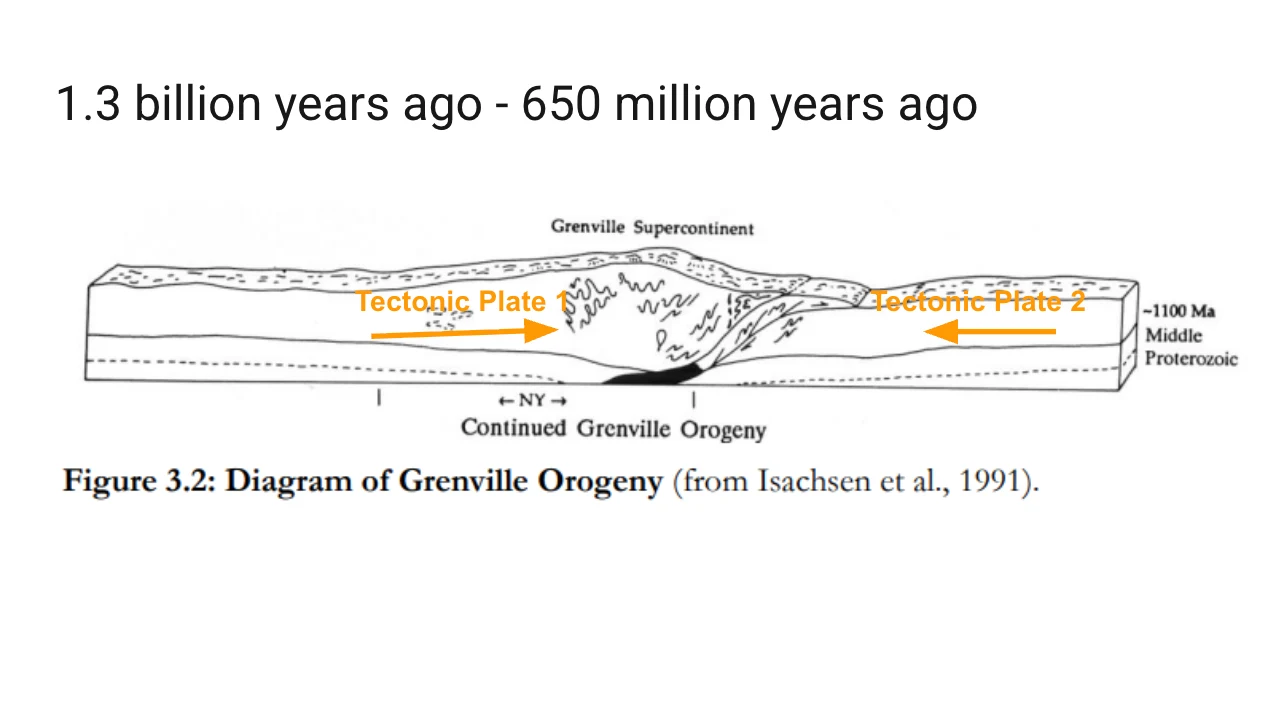
Students piece together a timeline of NYC’s geologic history and gain an understanding of how that has impacted the distribution of freshwater throughout the region.

Students will:
  • Construct a scientific explanation based on evidence for how the uneven distributions of New York State’s water resources are the result of past geoscience processes.
Standards
No standards assigned at this time.
CHAPTER

Chevron pointing right

Lesson

:

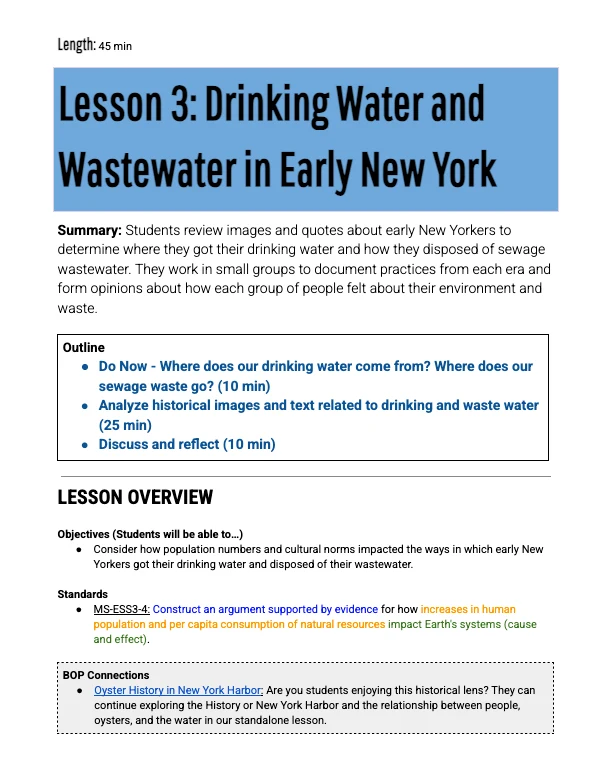
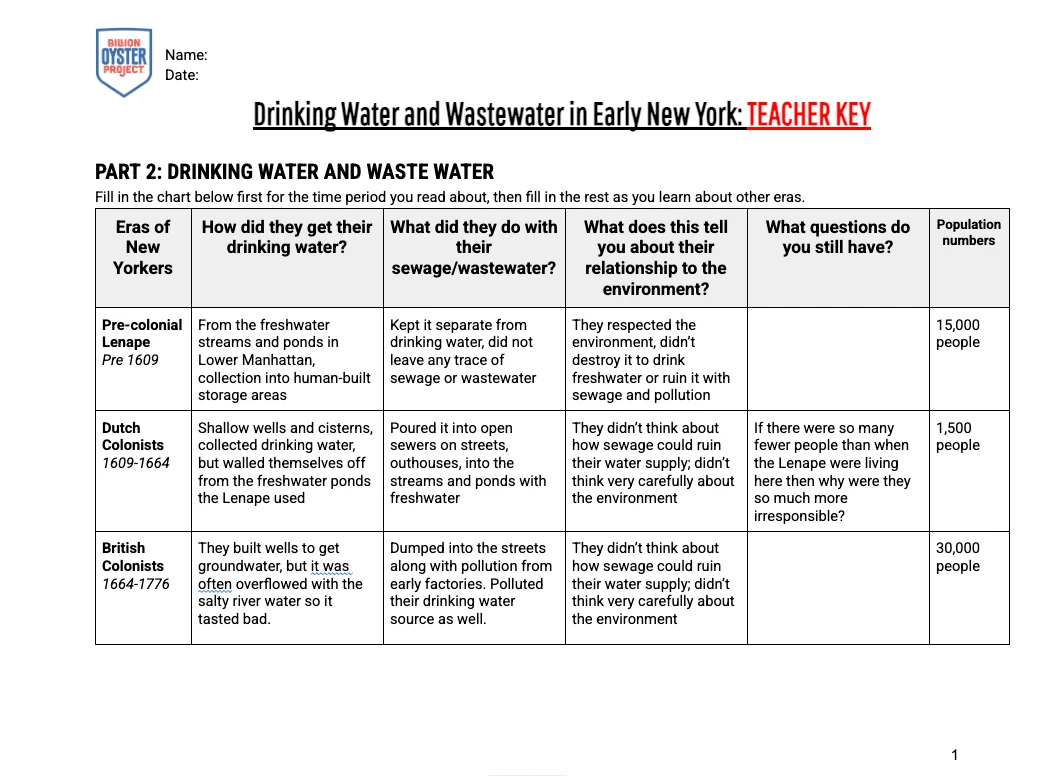
Drinking Water and Wastewater in Early New York

Document icon with a folded corner and text lines
Length
1 class period
Setting
Classroom
Lesson Question:
How did early New Yorkers access and dispose of water?
Lesson Snapshot

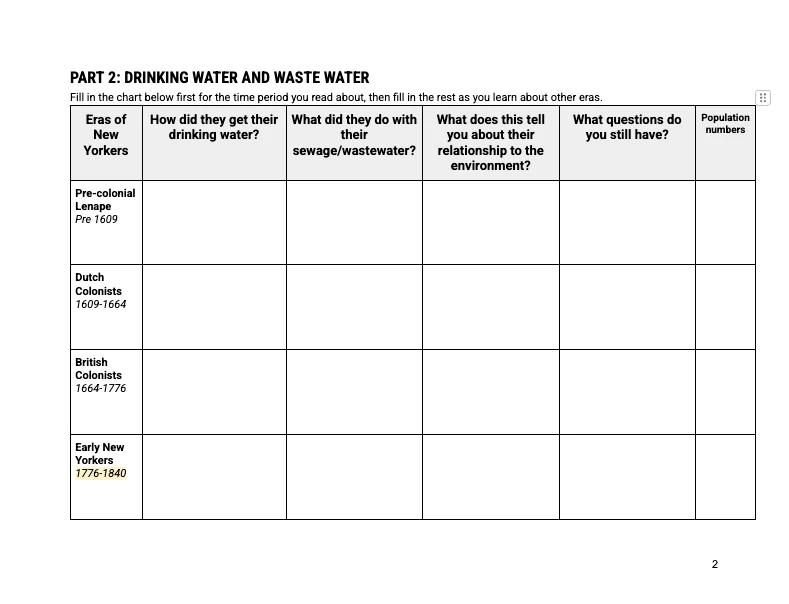
Students review images and quotes about early New Yorkers to determine where they got their drinking water and how they disposed of sewage wastewater. They work in small groups to document practices from each era and form opinions about how each group of people felt about their environment and waste.

Students will:
  • Consider how population numbers and cultural norms impacted the ways in which early New Yorkers got their drinking water and disposed of their wastewater.
Standards
No standards assigned at this time.
CHAPTER

Chevron pointing right

Lesson

:

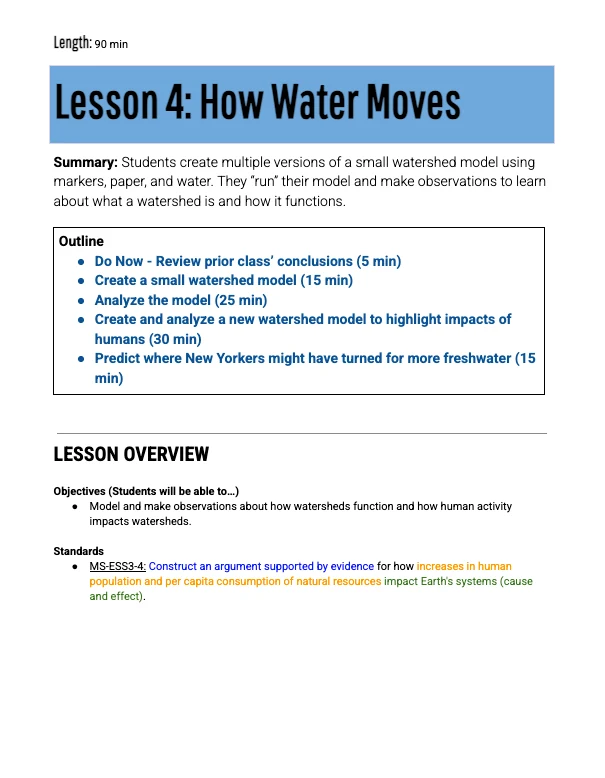
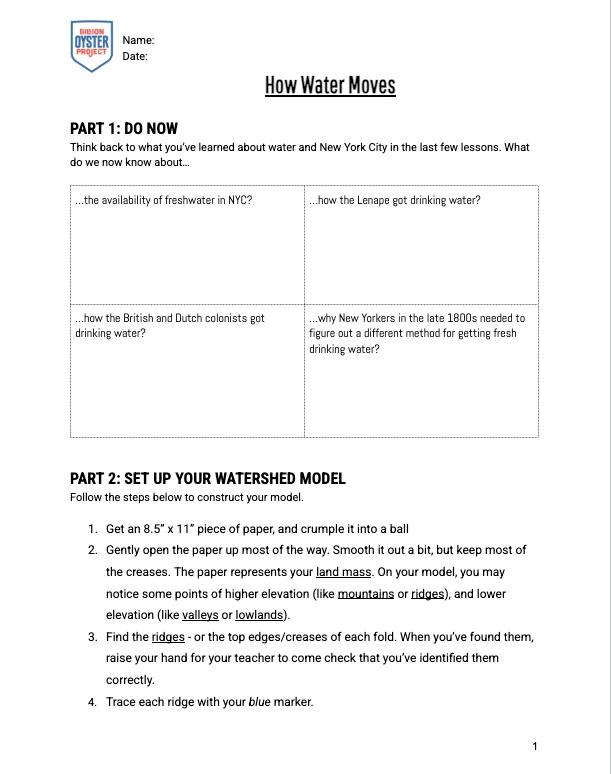
How Water Moves

Document icon with a folded corner and text lines
Length
2 class periods
Setting
Classroom
Lesson Question:
How does water move over the surface of the earth?
Lesson Snapshot

Students create multiple versions of a small watershed model using markers, paper, and water. They “run” their model and make observations to learn about what a watershed is and how it functions.

Students will:
  • Model and make observations about how watersheds function and how human activity impacts watersheds.
Standards
No standards assigned at this time.
Materials & Quick Links

Sign up to access lesson content

Create free teacher credentials to access full lesson plans, downloadable materials, and teaching resources for your classroom.

CHAPTER

Chevron pointing right

Lesson

:

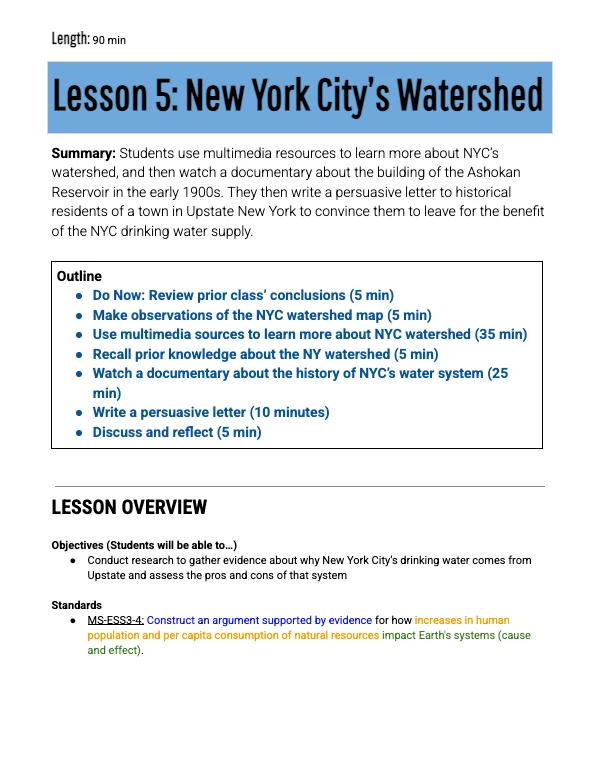
New York City’s Watershed

Document icon with a folded corner and text lines
Length
2 class periods
Setting
Classroom
Lesson Question:
Where does our drinking water come from and how do we get it to NYC?
Lesson Snapshot

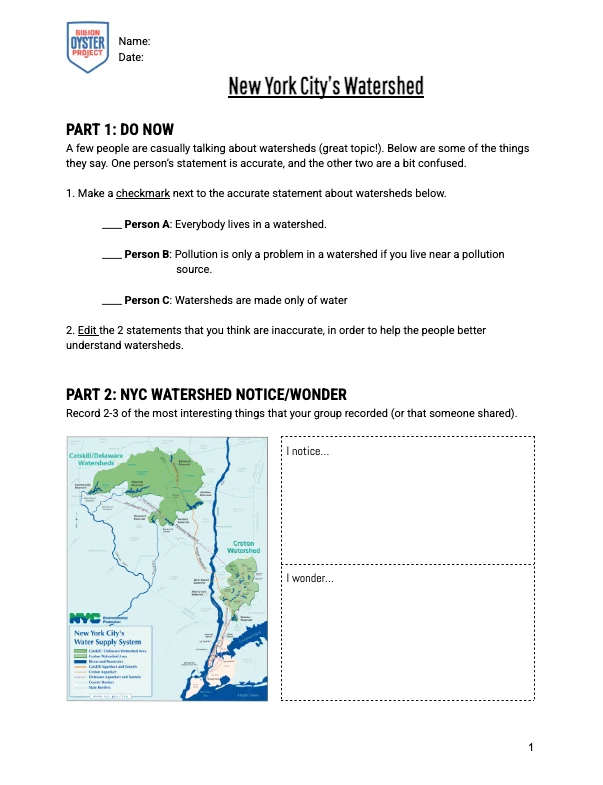
Students use multimedia resources to learn more about NYC’s watershed, and then watch a documentary about the building of the Ashokan Reservoir in the early 1900s. They then write a persuasive letter to historical residents of a town in Upstate New York to convince them to leave for the benefit of the NYC drinking water supply.

Students will:
  • Conduct research to gather evidence about why New York City’s drinking water comes from Upstate and assess the pros and cons of that system.
Standards
No standards assigned at this time.
CHAPTER

Chevron pointing right

Lesson

:

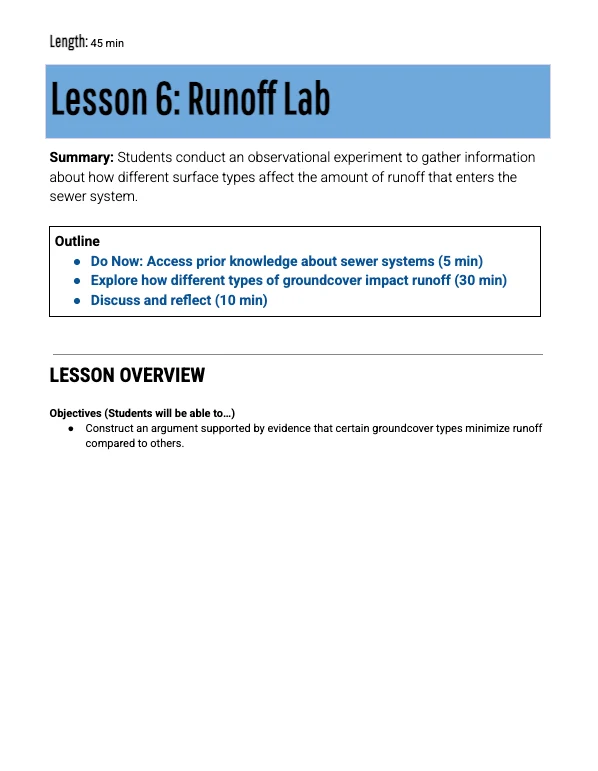
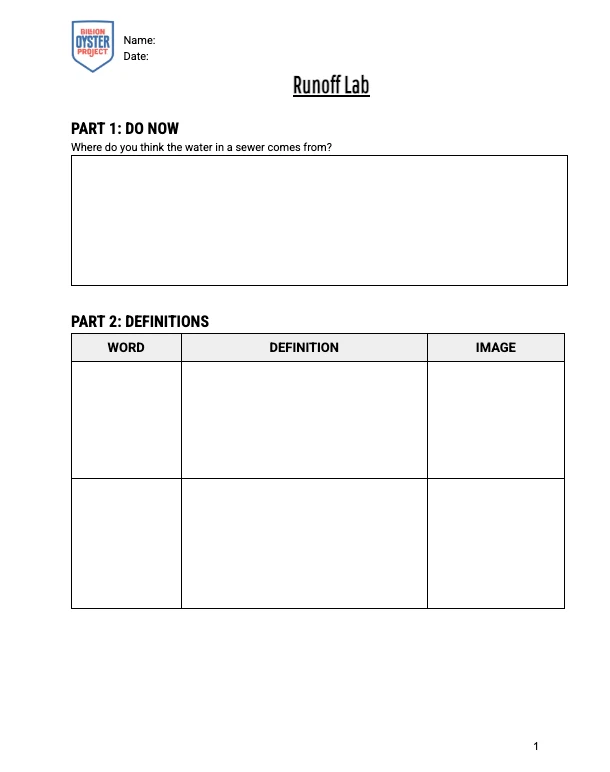
Runoff Lab

Document icon with a folded corner and text lines
Length
1 class period
Setting
Both
Lesson Question:
How does groundcover impact runoff?
Lesson Snapshot

Students conduct an observational experiment to gather information about how different surface types affect the amount of runoff that enters the sewer system.

Students will:
  • Construct an argument supported by evidence that certain groundcover types minimize runoff compared to others.
Standards
No standards assigned at this time.
Materials & Quick Links

Sign up to access lesson content

Create free teacher credentials to access full lesson plans, downloadable materials, and teaching resources for your classroom.

CHAPTER

Chevron pointing right

Lesson

:

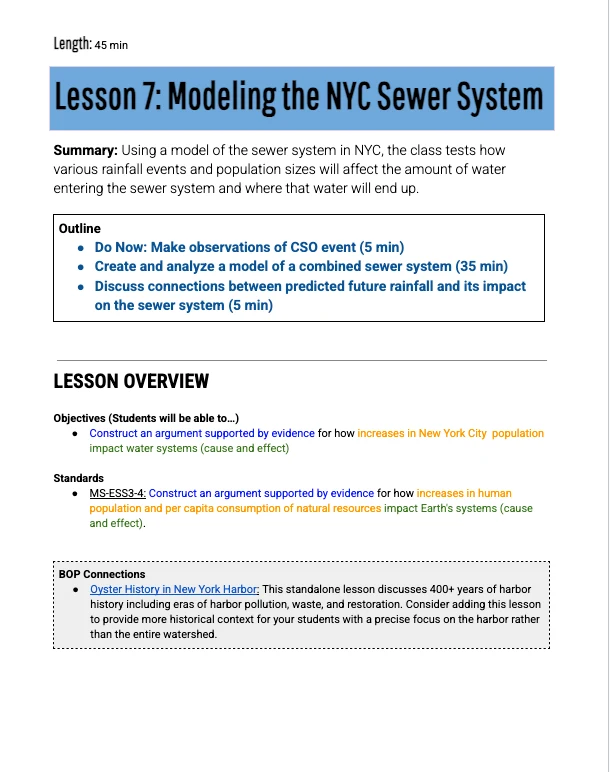
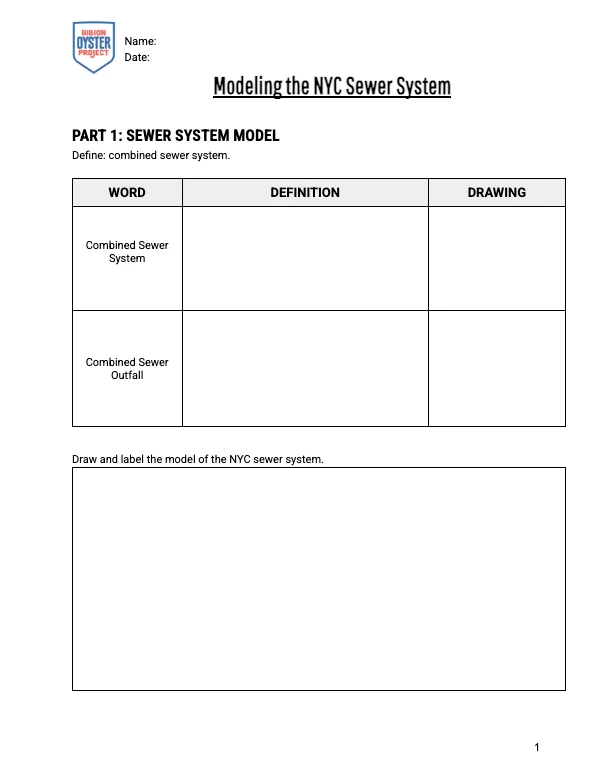
Modeling the NYC Sewer System

Document icon with a folded corner and text lines
Length
1 class period
Setting
Classroom
Lesson Question:
How does the NYC sewer system work and what are its limitations?
Lesson Snapshot

Using a model of the sewer system in NYC, the class tests how various rainfall events and population sizes will affect the amount of water entering the sewer system and where that water will end up.

Students will:
  • Construct an argument supported by evidence for how increases in New York City population impact water systems (cause and effect).
Standards
No standards assigned at this time.
Materials & Quick Links

Sign up to access lesson content

Create free teacher credentials to access full lesson plans, downloadable materials, and teaching resources for your classroom.

CHAPTER

Chevron pointing right

Lesson

:

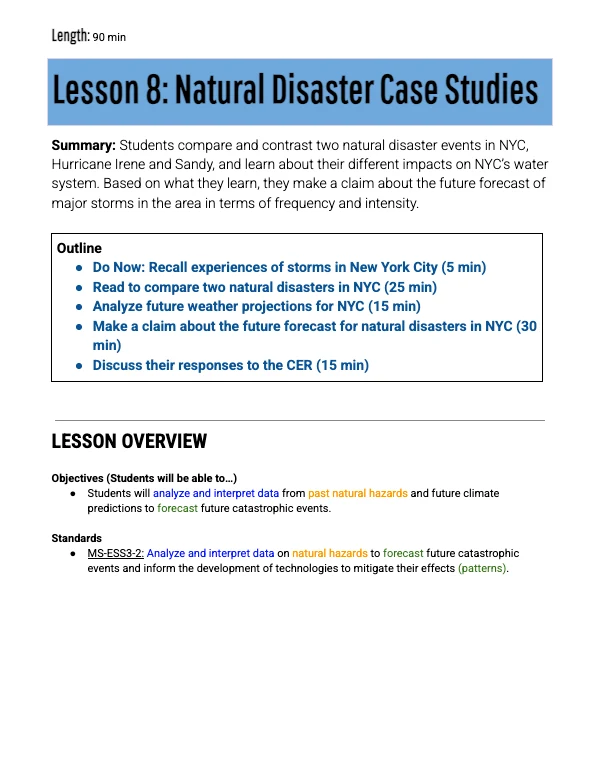
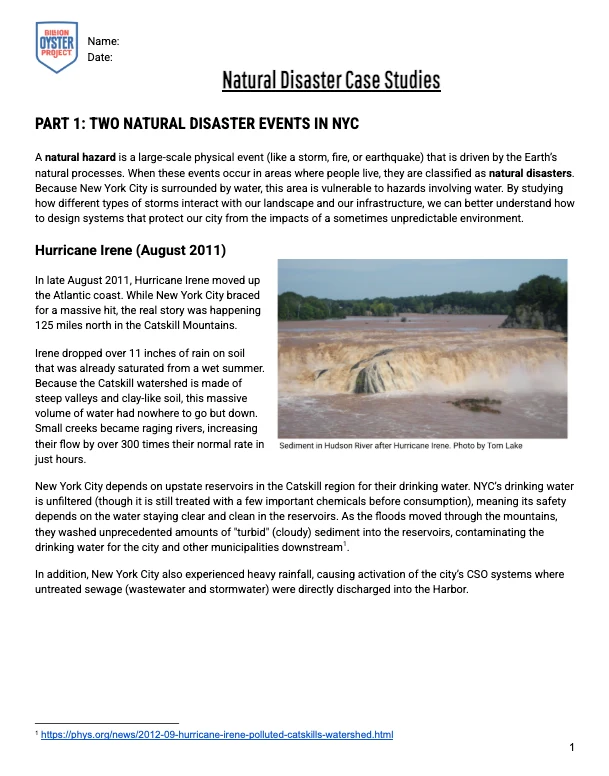
Natural Disaster Case Studies

Document icon with a folded corner and text lines
Length
2 class periods
Setting
Classroom
Lesson Question:
How have natural hazards impacted our water systems and what can that tell us about the future?
Lesson Snapshot

Students compare and contrast two natural disaster events in NYC, Hurricane Irene and Sandy, and learn about their different impacts on NYC’s water system. Based on what they learn, they make a claim about the future forecast of major storms in the area in terms of frequency and intensity.

Students will:
  • Analyze and interpret data from past natural hazards and future climate predictions to forecast future catastrophic events.
Standards
No standards assigned at this time.
Materials & Quick Links

Sign up to access lesson content

Create free teacher credentials to access full lesson plans, downloadable materials, and teaching resources for your classroom.

CHAPTER

Chevron pointing right

Lesson

:

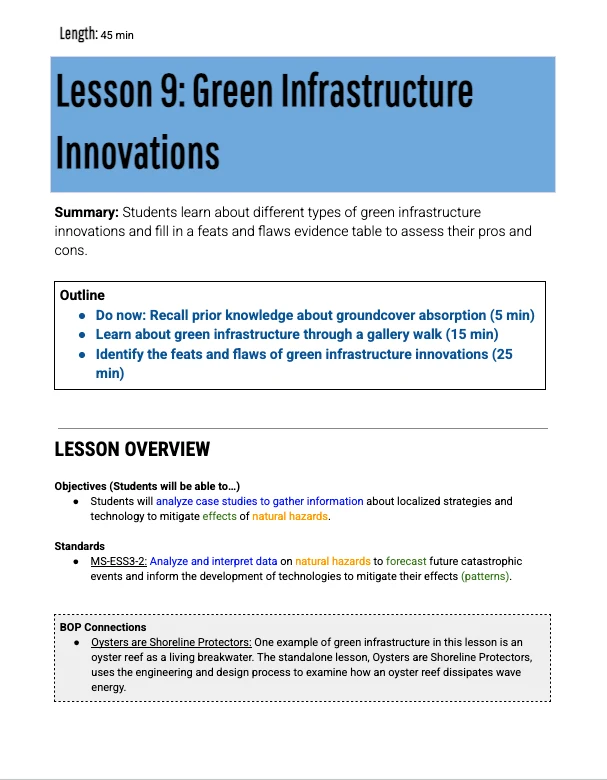
Green Infrastructure Innovations

Document icon with a folded corner and text lines
Length
1 class period
Lesson Question:
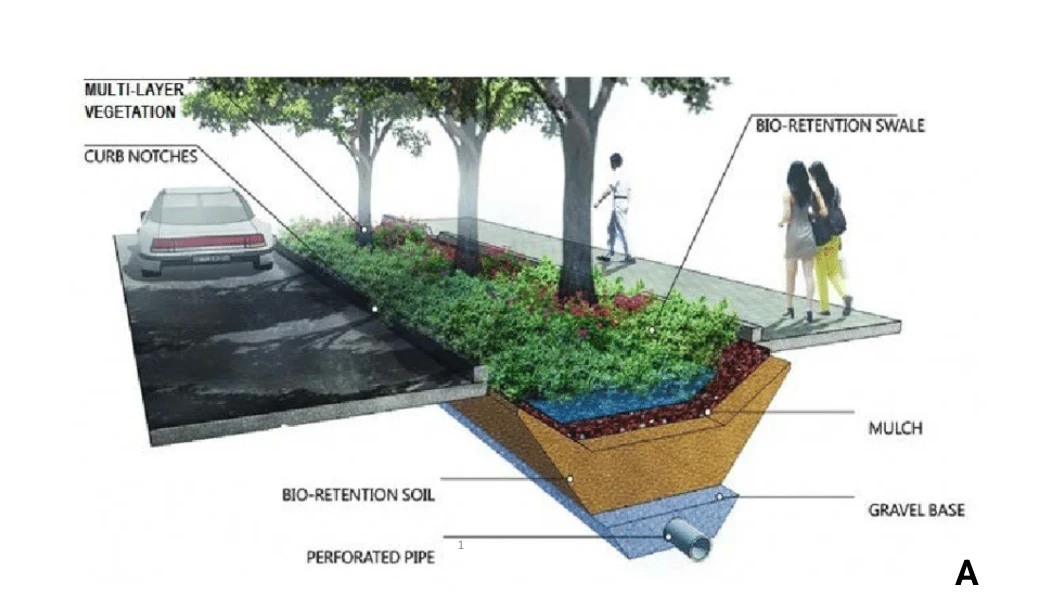
What are examples of existing green infrastructure to improve the water systems in NY?
Lesson Snapshot

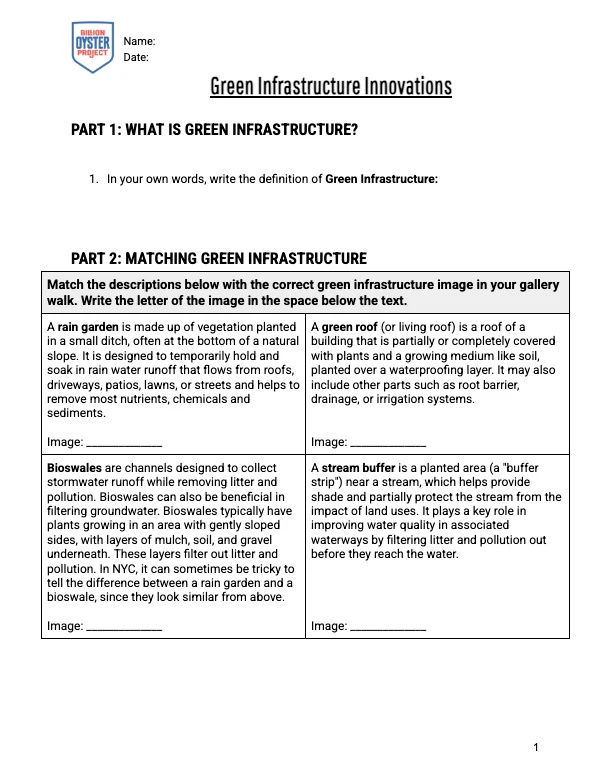
Students learn about different types of green infrastructure innovations and complete a feats and flaws evidence table to assess their pros and cons.

Students will:
  • Analyze case studies to gather information about localized strategies and technology to mitigate effects of natural hazards.
Standards
No standards assigned at this time.
Materials & Quick Links

Sign up to access lesson content

Create free teacher credentials to access full lesson plans, downloadable materials, and teaching resources for your classroom.

CHAPTER

Chevron pointing right

Lesson

:

Design Improvements to NY Water Systems

Document icon with a folded corner and text lines
Length
4+ class periods
Setting
Classroom
Lesson Question:
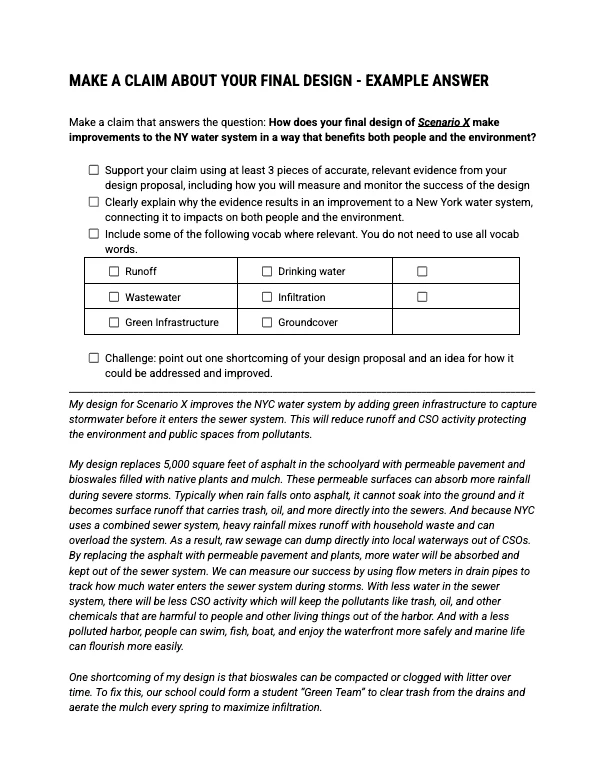
How do we design improvements for our water system that benefit both people and the environment?
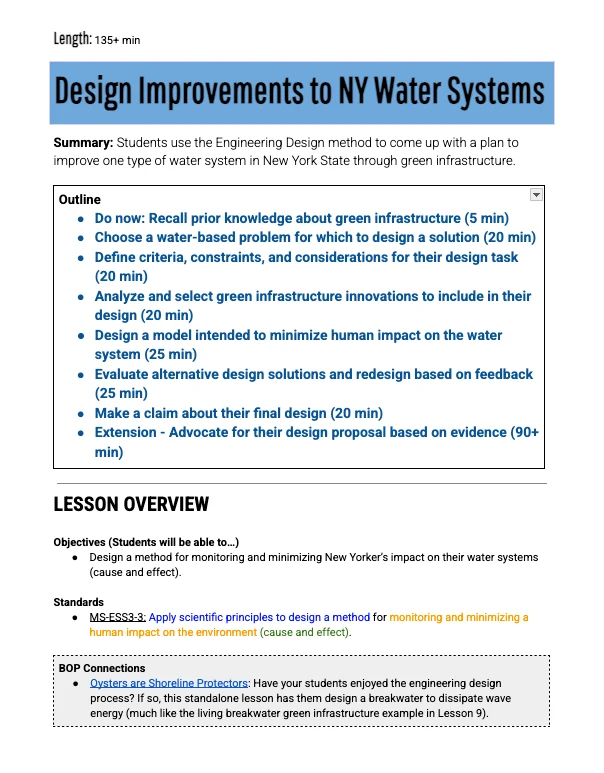
Lesson Snapshot

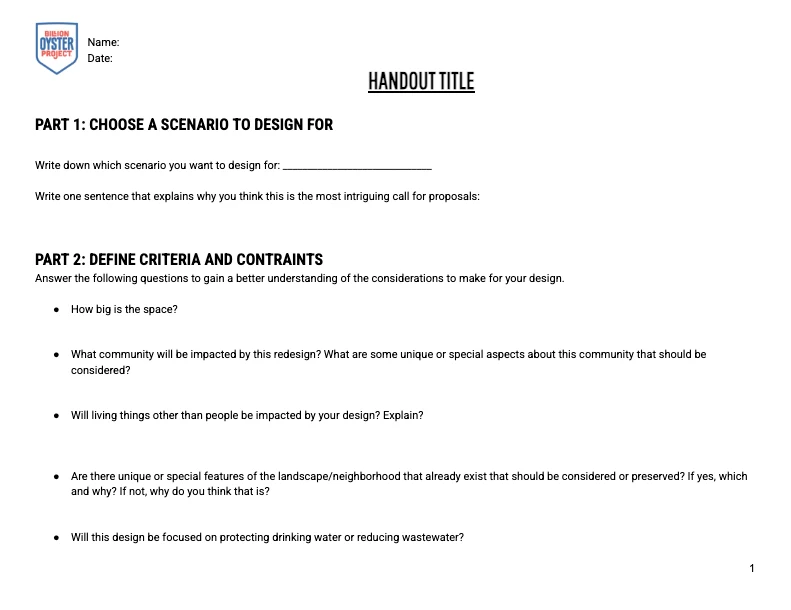
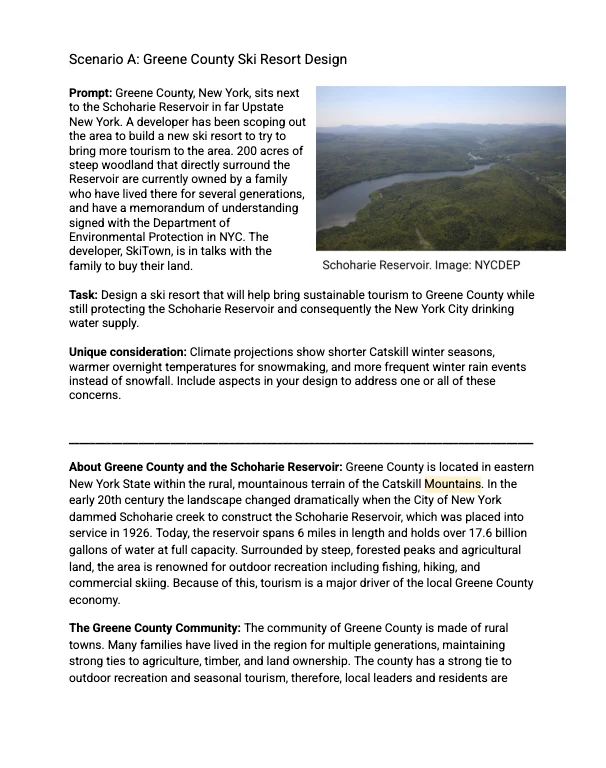
Students use the Engineering Design process to design a ski resort, public park, or schoolyard with the intention of improving the water systems in New York State through green infrastructure.

Students will:
  • Design a method for monitoring and minimizing New Yorker’s impact on their water systems (cause and effect).
Standards
No standards assigned at this time.