Don't forget to complete your donation
complete your donation
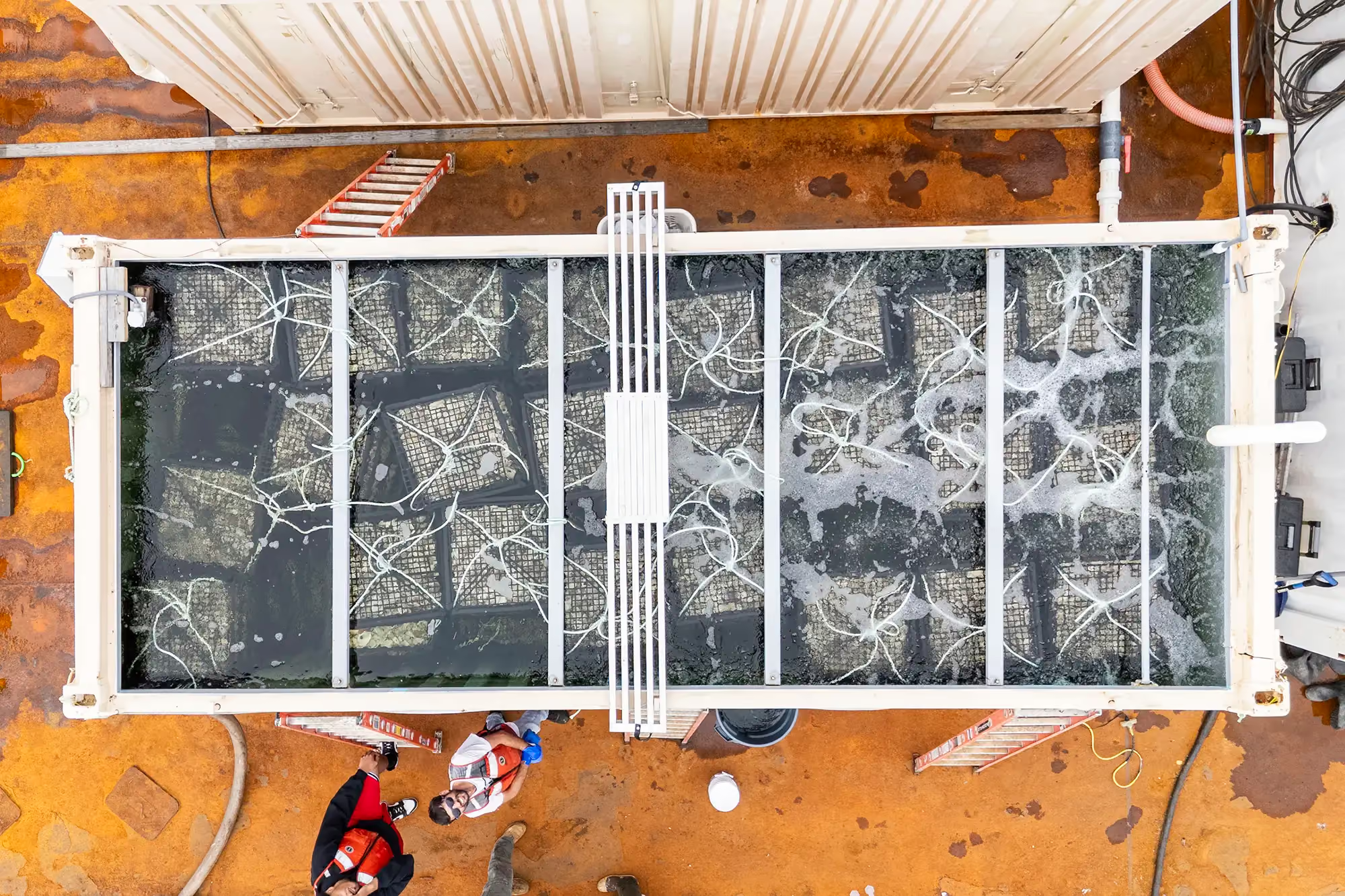
Overhead view of an oyster setting tank filled with cages aboard a barge, crew standing alongside
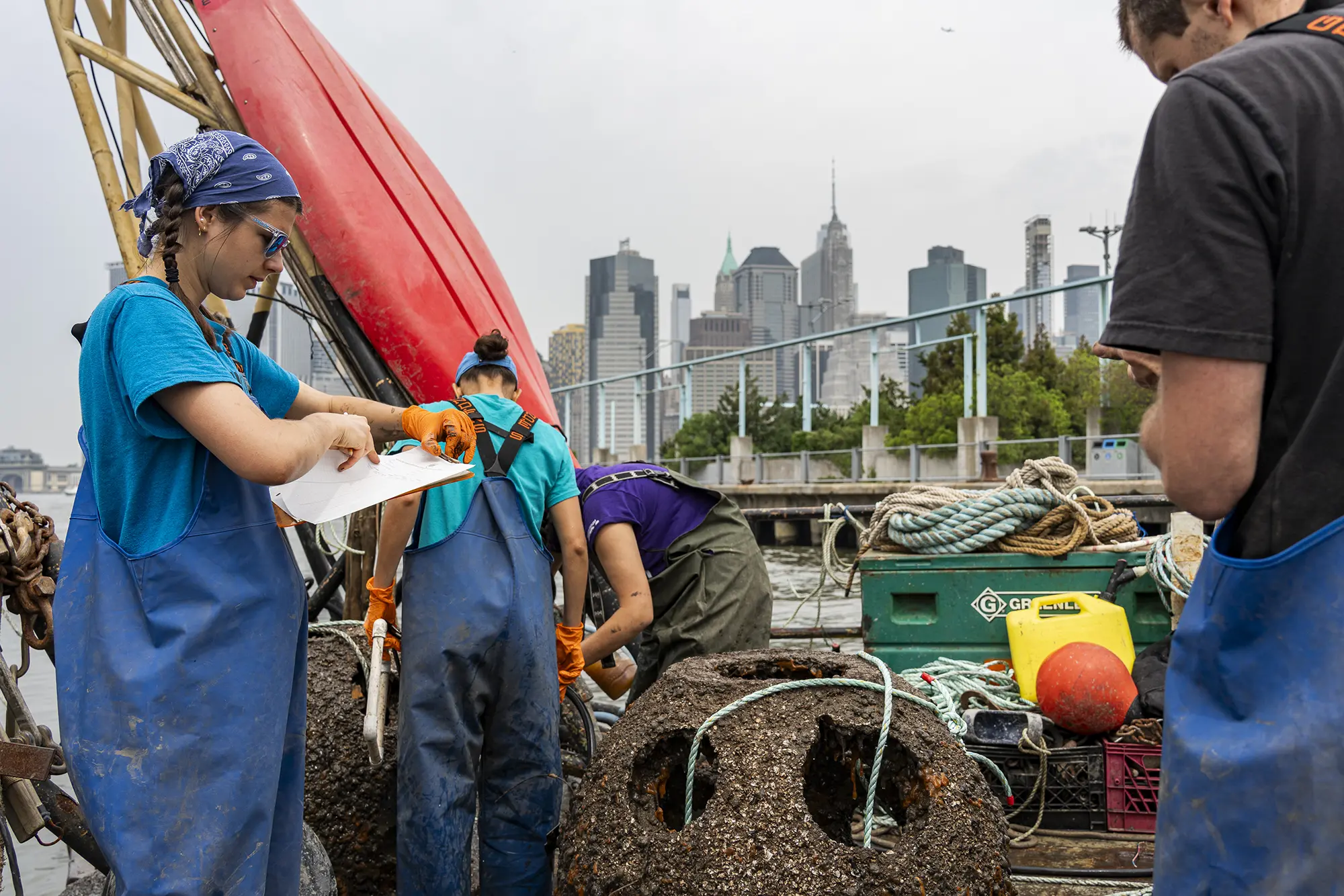
Crew in work bibs logging data on encrusted reef balls pulled from the harbor, Manhattan skyline behind
Crew in life vests tipping crates of oyster shells off a boat stern to build a reef
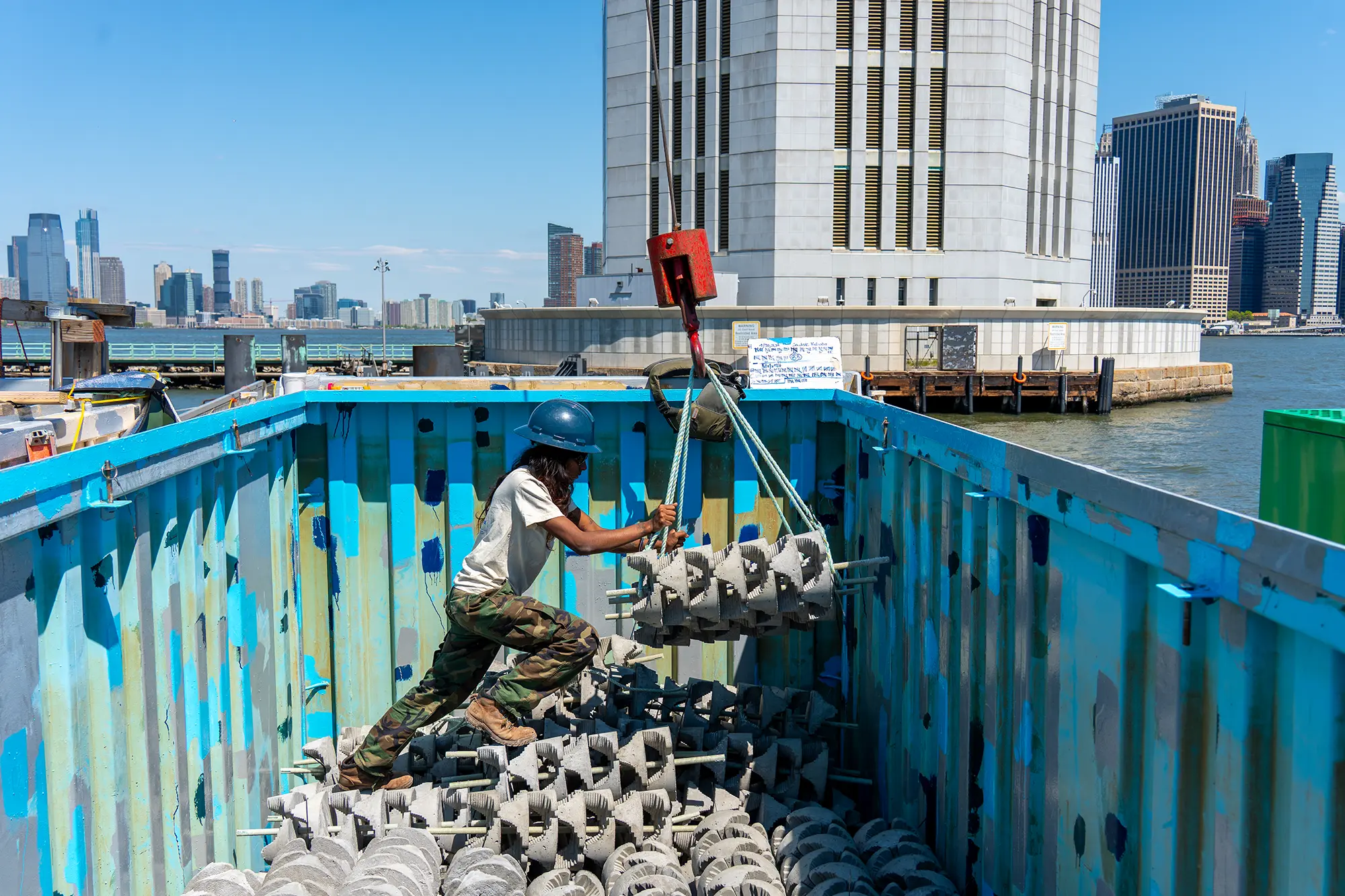
Worker in a hard hat guiding a crane sling of concrete reef modules inside a barge
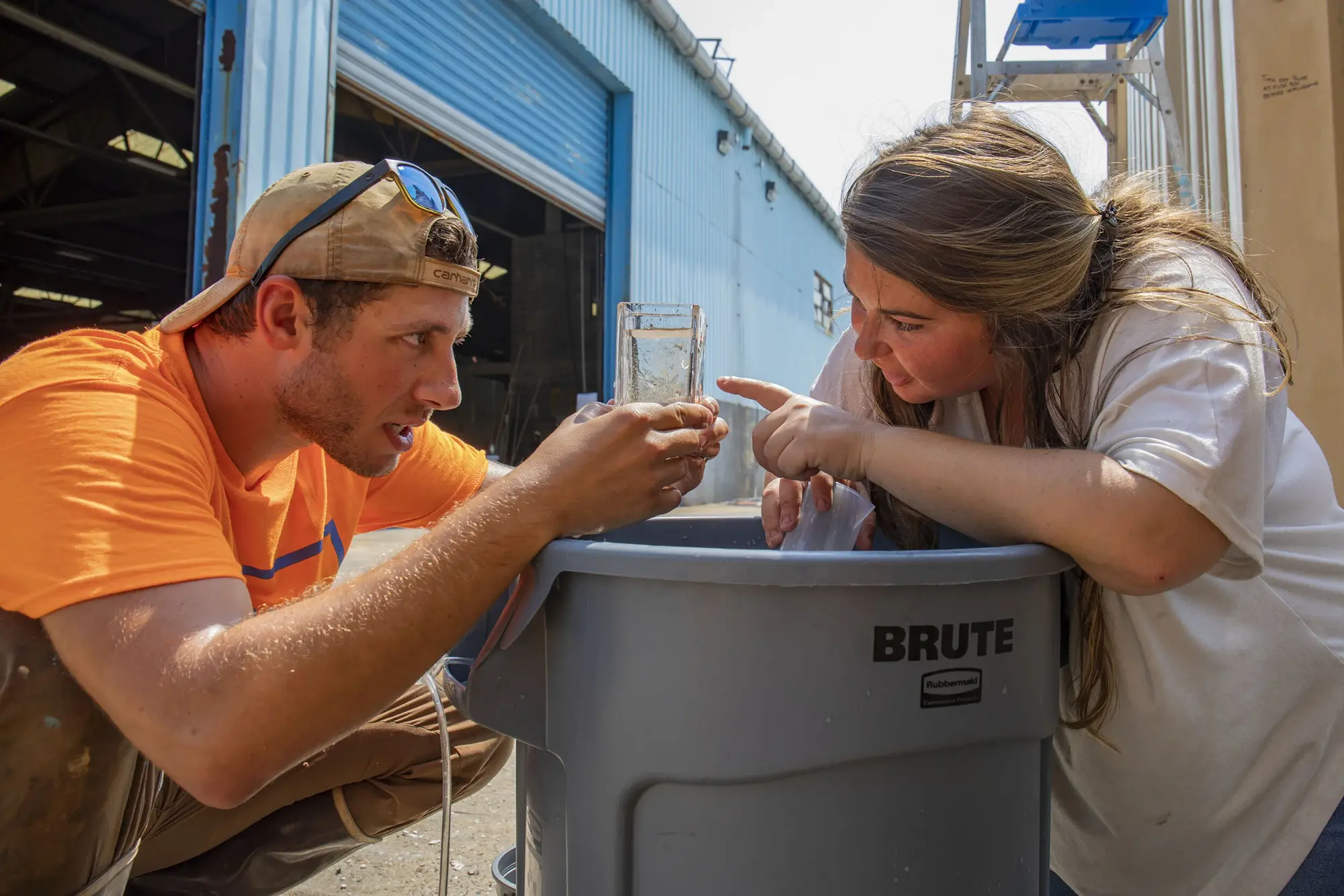
Two staff members examining a small container of oyster larvae over a setting tank

restoration

Since 2014, over
200M+
oysters and
19
acres of reef have been restored.
oyster restoration at scale in nyc
donate now
oyster restoration at scale in nyc

about our restoration

Our restoration team designs, permits, builds, and monitors oyster reefs harborwide using science to move from proof of concept to permanent, self-sustaining systems.

300,000+
lbs of shell Collected / Year
Partner restaurants send their used shells back to the Harbor every year instead of the landfill.
200M+
Oysters Restored
Our restoration team has returned living, water-filtering oysters to reefs across New York Harbor.
19
Acres of Reef Restored
Once-barren harbor bottom has been rebuilt into living reef habitat since 2014.
16,000+
Volunteers
New Yorkers of all ages pitch in at reef builds, shell counts, and community events.
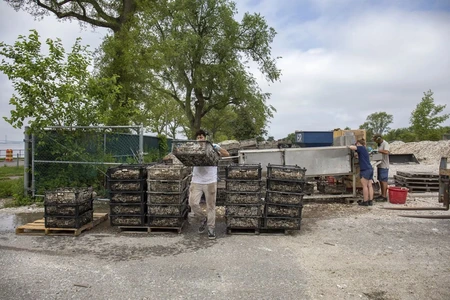
Crew member carrying a crate of oyster shells past stacked pallets at the shell recycling yard
Two staff members examining a small container of oyster larvae over a setting tank

Ten Years of Oyster Restoration

The data has shown that, across regions and years, oysters are spawning and recruitment is occurring harborwide. Today, we know that, to establish self-sustaining and functional oyster reefs, restoration must occur on a landscape scale.

But we’ve also learned something harder. Small-scale reefs are not self-sustaining. We must create a connected system throughout the entire Harbor. That's where our goal comes from: restoring one billion oysters to the Harbor by 2030.

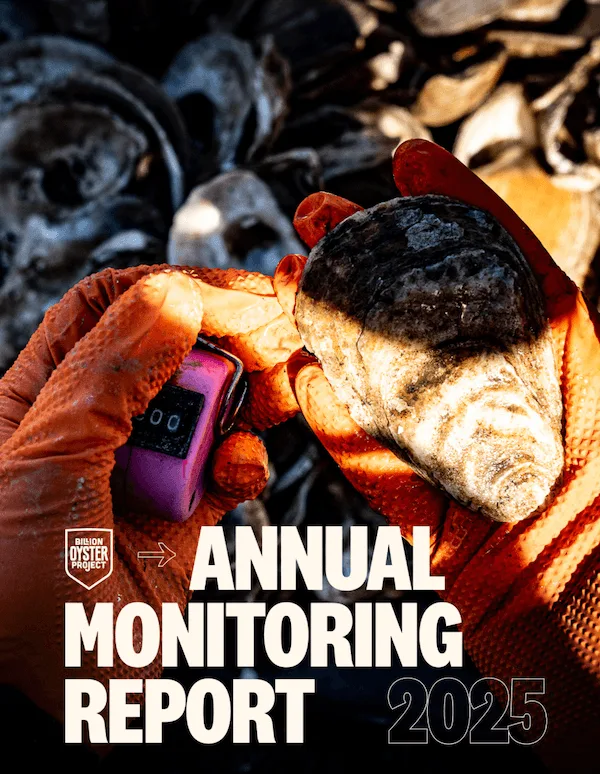
READ OUR 2025 ANNUAL MONITORING REPORT

why oysters, you ask?

Illustrated Lower Manhattan skyline
03
02
01

oysters clean water

A single oyster can filter up to 50 gallons of water per day, removing algae and excess nutrients that cloud the harbor.

WHY EASTERN OYSTERS?

Eastern oysters, native to New York Harbor, are an ecosystem engineer and foundational to a healthy, biodiverse estuary, making them the right species for long-term restoration.
why oysters?
02
/
03

oysters build reefs

When oysters grow together, they form reefs—living structures that expand over time and support larger ecological systems.

WHY REEFS MATTER TO NYC

New York Harbor once had over tens of thousands of acres of oyster reefs. Restoration focuses on rebuilding this lost natural infrastructure.
why oysters?
03
/
03

oysters protect shores

As reefs grow, they slow waves and absorb energy, helping protect shorelines and nearby communities from erosion and storm surge.

a nature-based defense

Oyster reefs provide protection without concrete or steel — strengthening coastlines while continuing to grow and adapt over time.
restoration works
how restoration works
how
01

Recycle shells

Recycled shells become the foundation of new reefs.
02

design reefs

Our restoration team designs reef sites and works on permitting.
03

engagE new yorkers

We engage with New Yorkers.
04

build reefs

Reef structures are built and seeded to start living systems.
054

place reefs

Reefs are lowered into the Harbor strategically and studied over time.
06

follow the data

Data guides how restoration scales.
01

Recycle shells

Recycled shells become the foundation of new reefs.

Waste becomes habitat

We collect used oyster shells from more than 75 iconic restaurants across New York City. To date, we’ve recycled more than 3.1 million pounds of shell. Instead of heading to landfill, they return to the Harbor. Diners give back to the Harbor just by eating oysters. Every shell collected becomes part of a new reef system.
Mounds of recycled oyster shells curing outdoors beside a loader

Curing on Governors Island

Once on Governors Island, shells are cleaned and left to cure in the open air for months. This process removes bacteria and organic material so they are safe and stable. Over time, they become the hard surface oyster larvae need to attach to.
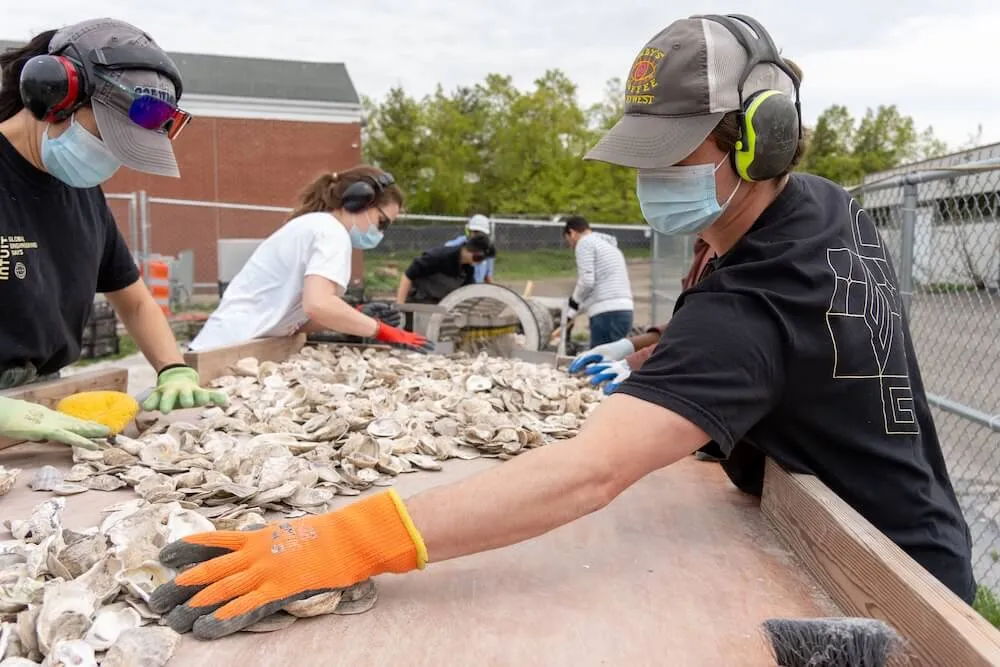
Masked volunteers sorting recycled oyster shells at an outdoor table

Community in Action

Students, volunteers, and corporate teams help clean shells and prepare materials, turning yesterday’s dinner into tomorrow’s reef. More than 16,000 volunteers have supported this work to date.
02

design reefs

Our restoration team designs reef sites and works on permitting.

Site Investigation & Design

We identify an area of interest for restoration and assess site conditions through surveys and monitoring to guide reef design, developing design plans tailored to each location, and secure all necessary permits to support successful oyster reef restoration.
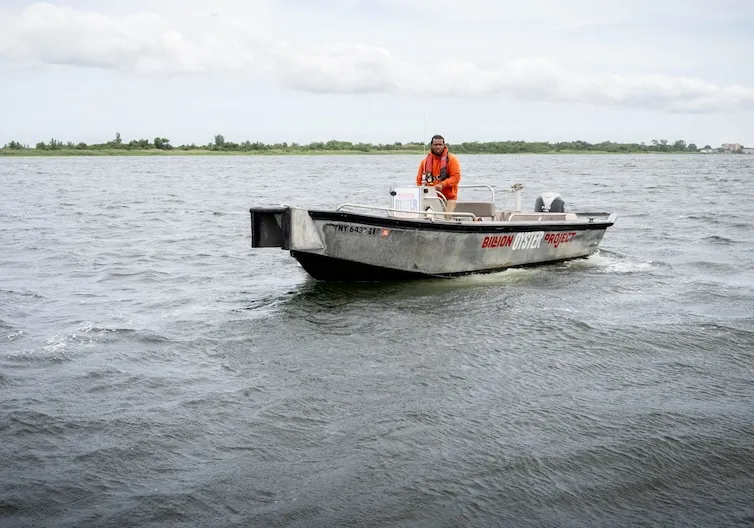
Crew member piloting a small Billion Oyster Project workboat across open water

Site investigation

With support from project partners, consultants, and communities, we conduct desktop and field-based surveys to understand site conditions in an area of interest. Some of these surveys directly inform design.
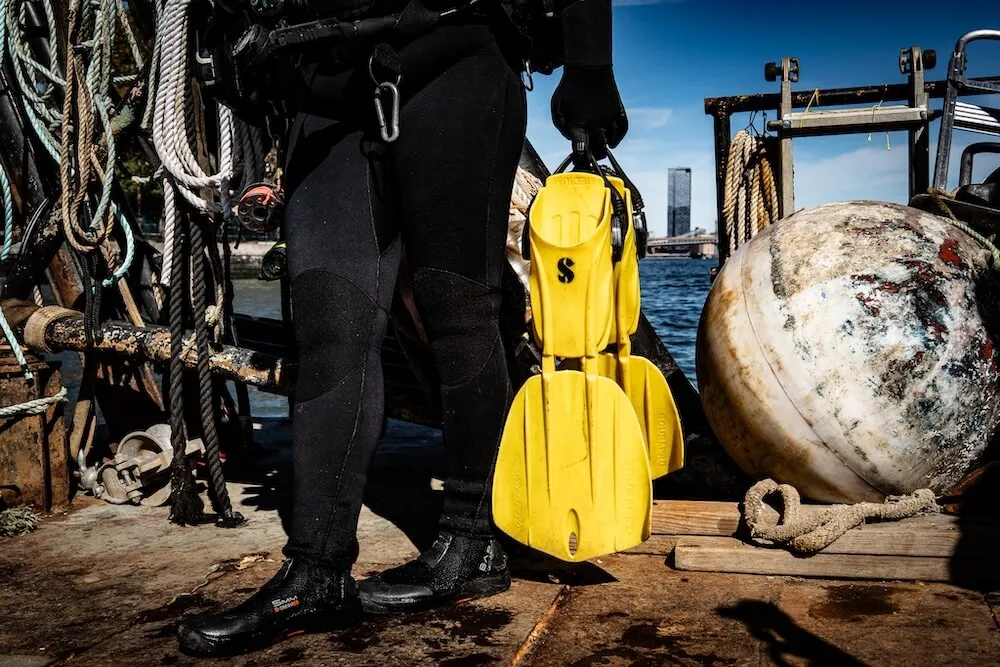
Diver in a wetsuit holding yellow fins on a dock before a monitoring dive

Pre-installation Monitoring

We conduct monitoring activities to understand invertebrate and fish presence and abundance at a site, establishing an ecological baseline to which post-restoration changes may be compared.
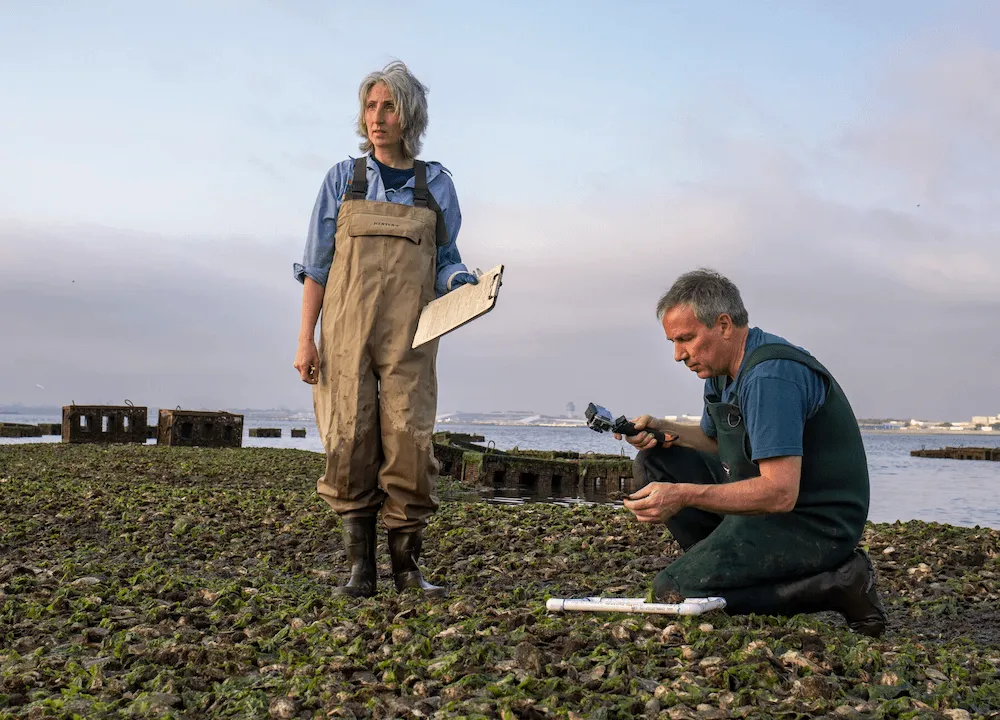
Two researchers in waders surveying an exposed oyster reef at low tide, one holding a clipboard

Design

We prepare conceptual, 30%, and 60% designs throughout the design phase. Using survey data, we determine the reef footprint, reef area, and substrate. Site conditions and design parameters inform us of the site's square footage, coverage, and oyster quantity. A reef’s design depends on site conditions and the project's goals.
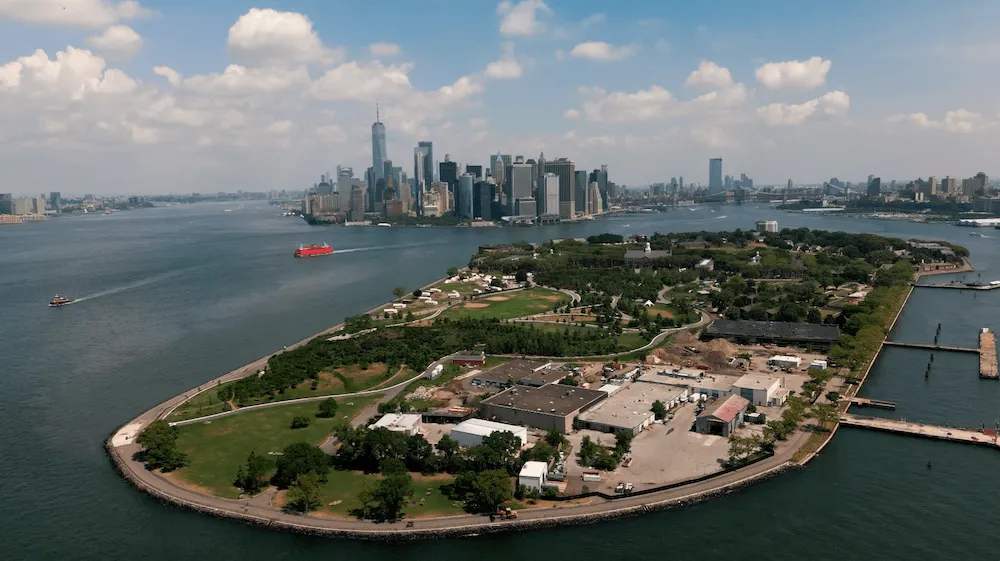
Aerial view of Governors Island with the Lower Manhattan skyline beyond

Permitting

We obtain city, state, and federal regulatory approvals and permits to install an oyster reef restoration project.
03

Engage new yorkers

We engage with New Yorkers.

inform the community

We provide clear, timely information about projects. This is done through IG posts, community board presentations, meetings with key stakeholders, and through sharing information about our restoration projects on the Billion Oyster Project website.
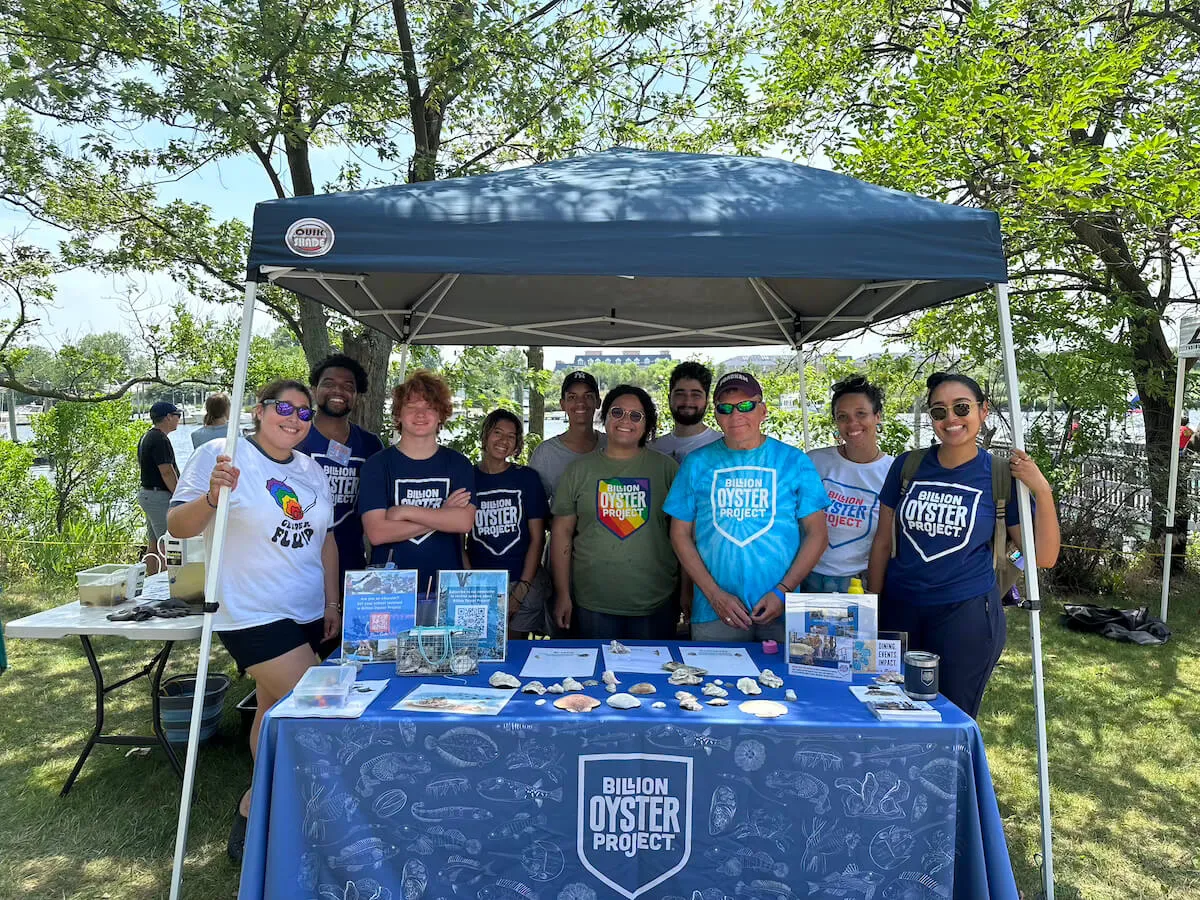
Billion Oyster Project team at an outreach tent with oyster shells on display

engage the community

We provide opportunities for community and school participation. Local schools and key community stakeholders are invited to participate in wild oyster surveys, volunteer days on Governors Island, and to view installations from land whenever feasible.
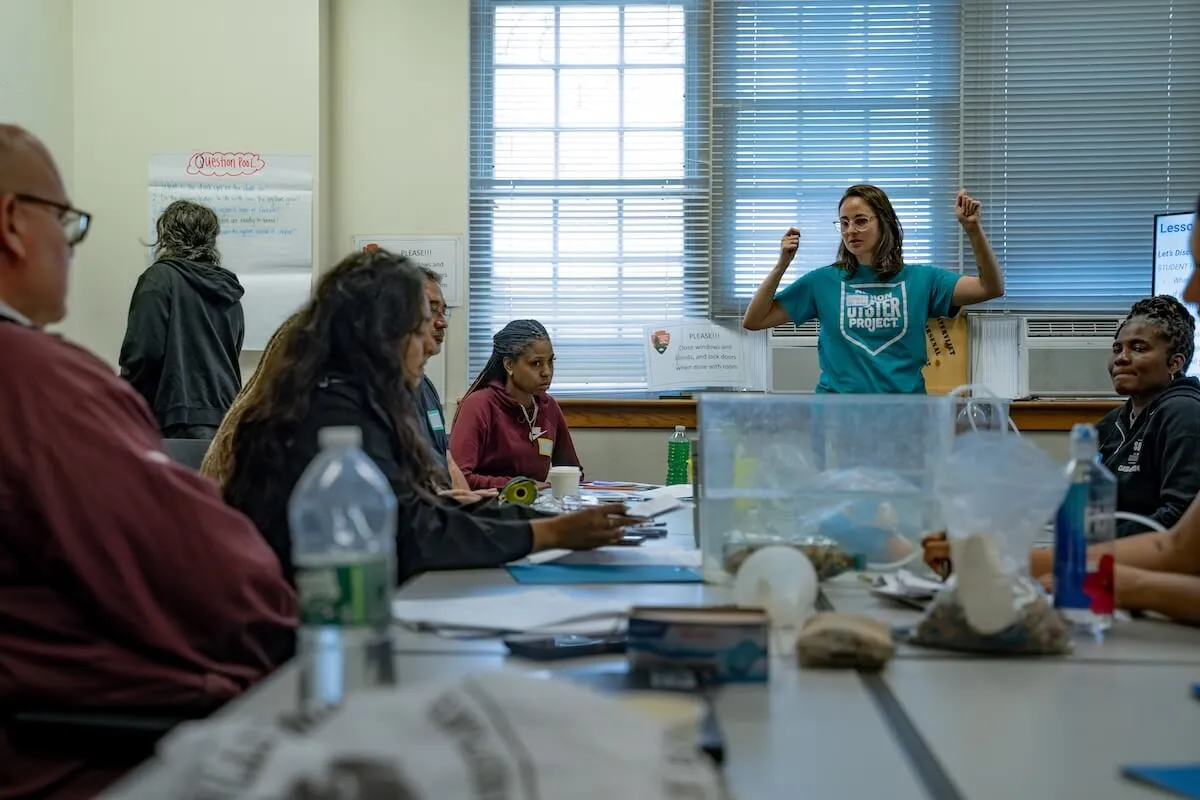
Billion Oyster Project educator leading a teacher workshop in a classroom

allow space for community feedback

We welcome community members to share feedback on projects. (e.g., Community scoping meetings, listening sessions, feedback forms).
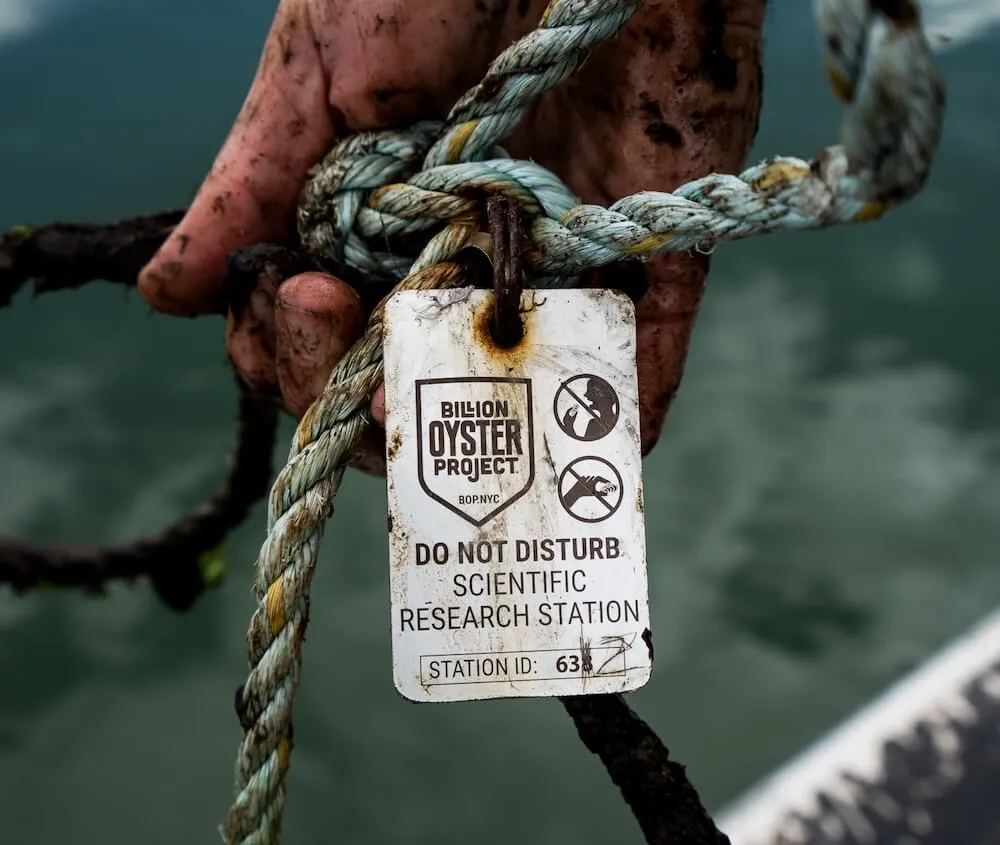
Hand holding a rope tagged Do Not Disturb Scientific Research Station

Provide a way to leave a lasting legacy

We aim to ensure our reefs maintain lasting relevance by including physical educational and/or cultural elements after installation. (e.g., signage, site-specific curriculum, sharing of restoration data and reports, reef naming/engraving for specific donors).
04

build reefs

Reef structures are built and seeded to start living systems.
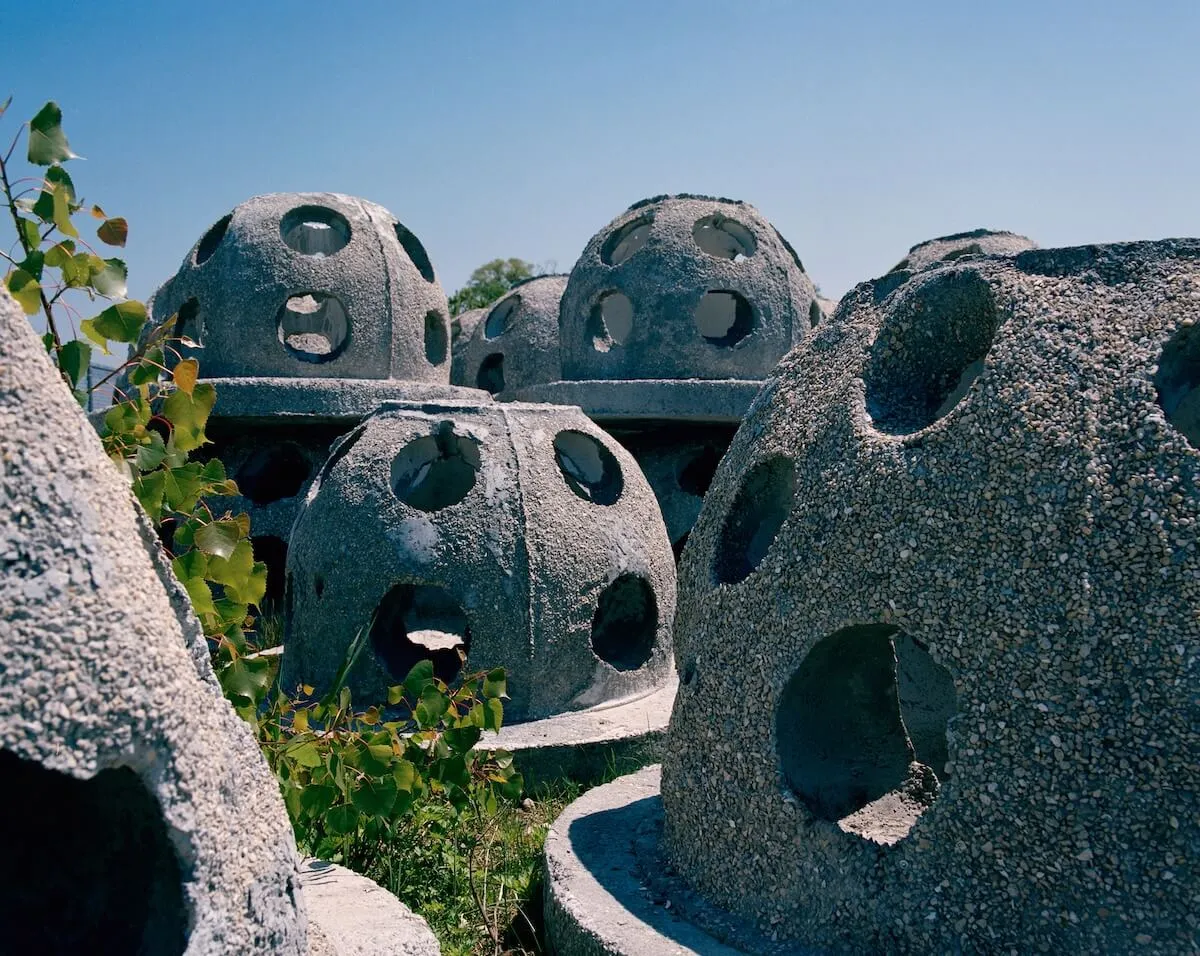
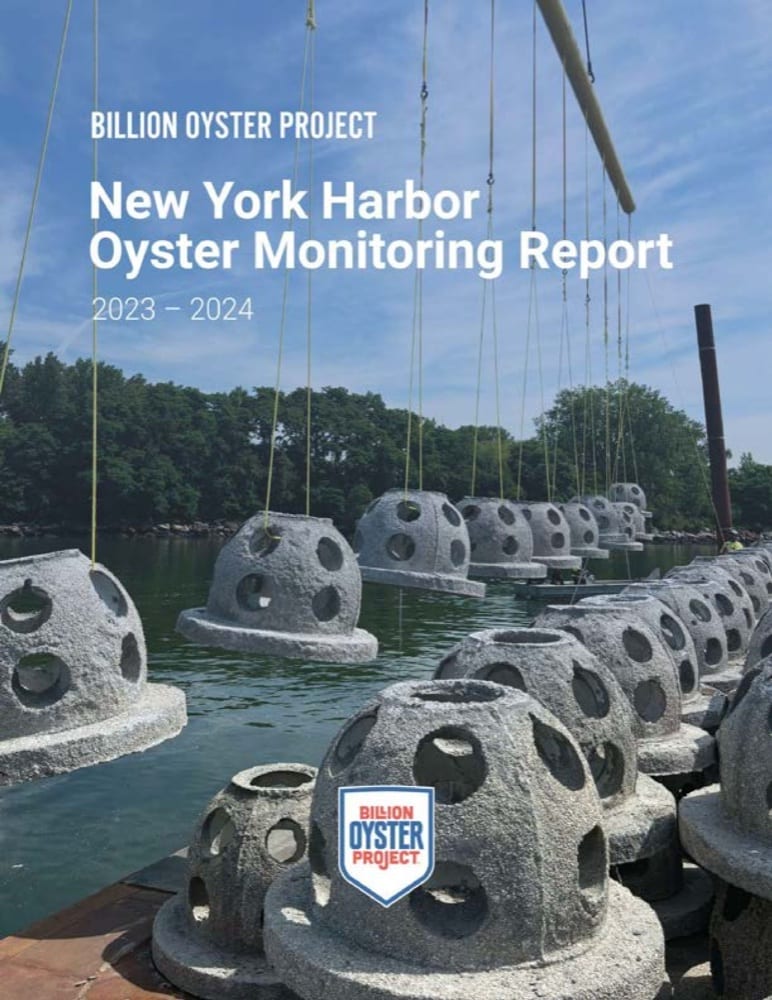
Perforated concrete reef ball domes staged on land before installation

Building durable reef structures

Using recycled shells and fabricating eco-friendly concrete structures, we build reefs that mimic the complexity of natural oyster reefs.

our reef balls

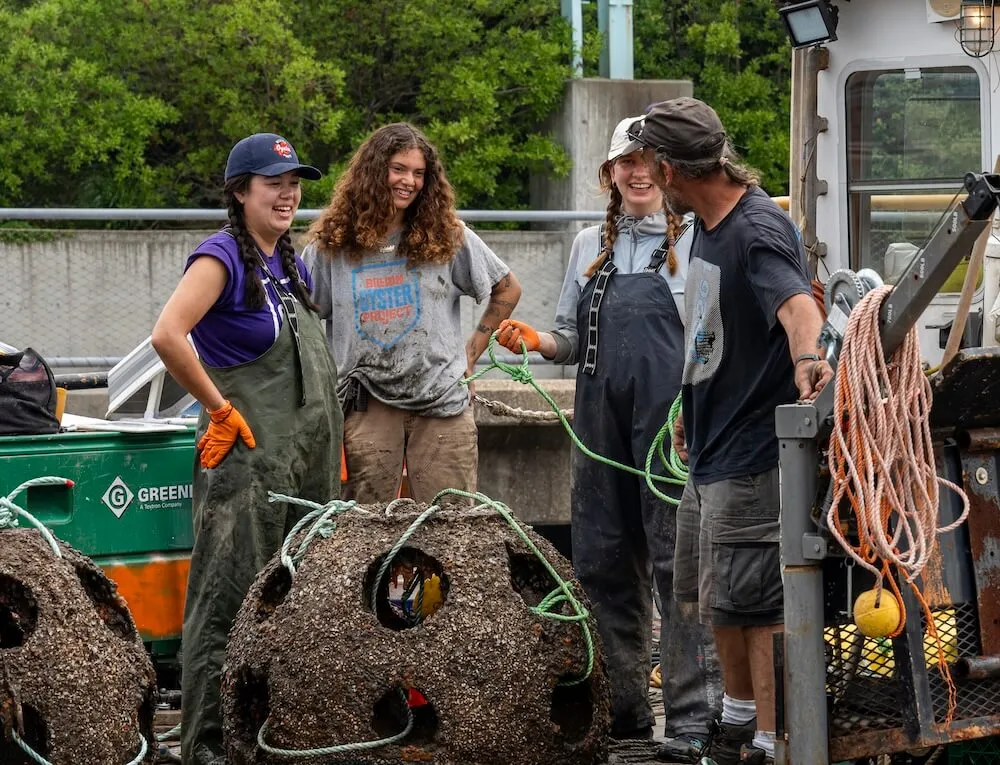
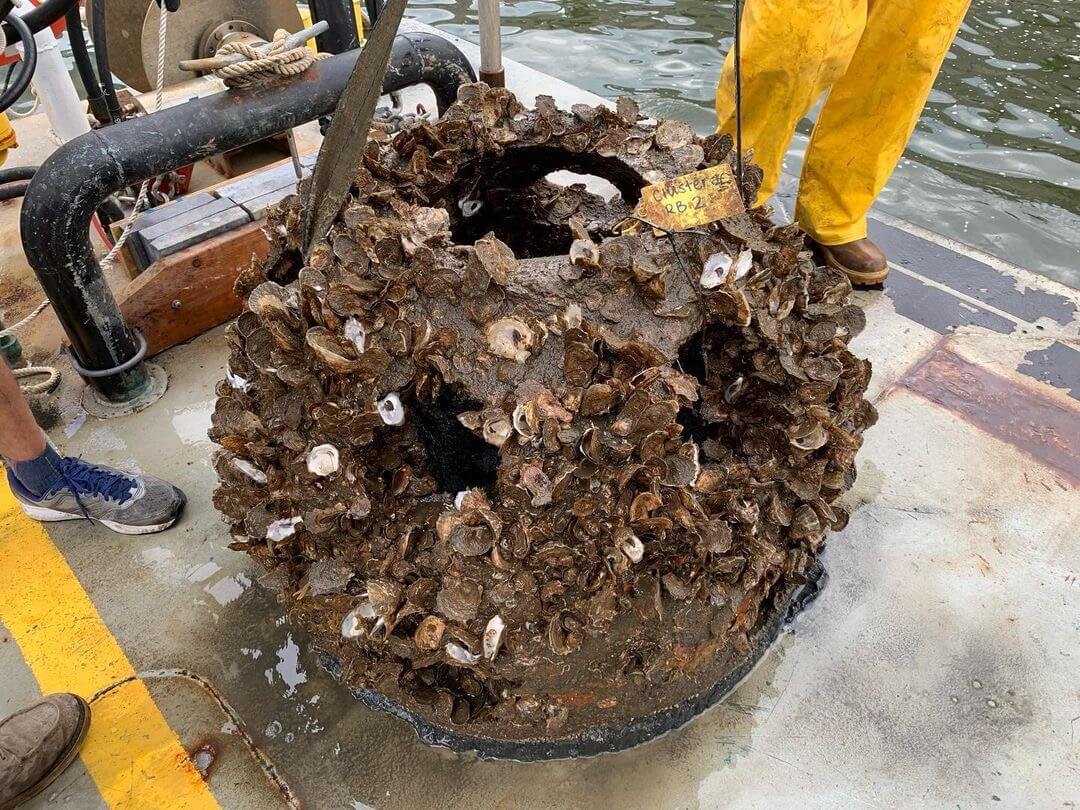
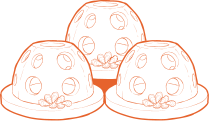
Each reef ball, as we like to call them, is embedded with cured oyster shell and shaped with openings and texture that create shelter for marine life. They reduce wave energy and protect young oysters as they grow. This is the backbone of a new reef system.
Crew sharing a laugh beside encrusted reef balls hauled onto the dock

designed for expansion

Some reef balls are seeded with live oysters. Others are installed as blank substrates, allowing future generations to settle and expand naturally. This approach strengthens reefs over time.
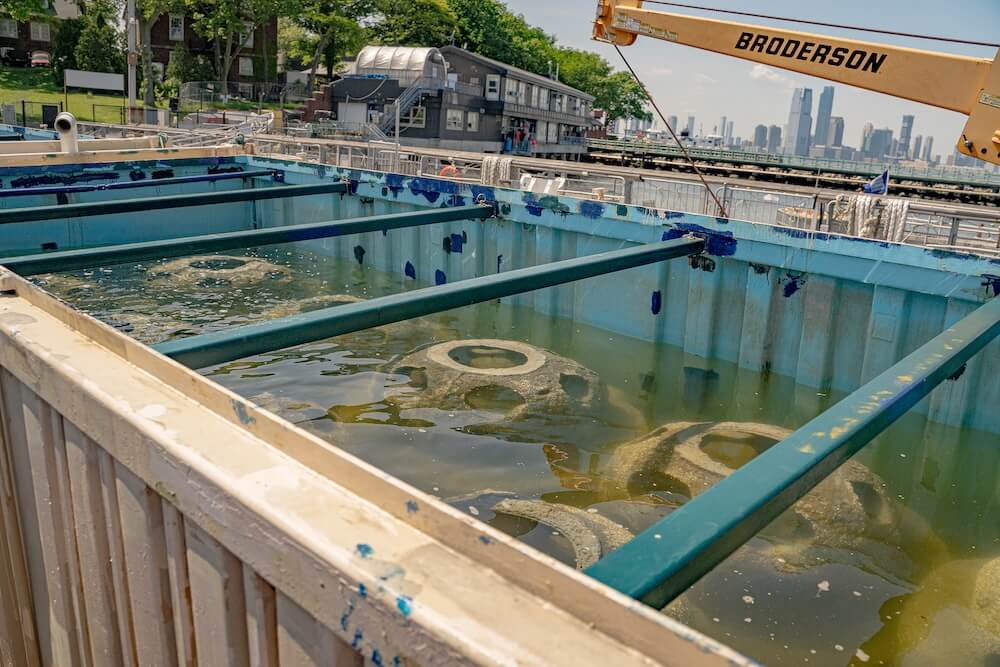
Setting tanks holding submerged reef structures where oyster larvae attach to shells

remote setting at scale

At Pier 101 on Governors Island, our remote setting facility uses tanks filled with flowing harbor water. Reef balls are placed inside, and millions of larvae are introduced to “set” to the structures to mature and grow. This is the beginning of reef formation.
Team gathered around a bin of harbor water taking baseline measurements on a dock

measuring the start

Before deployment, our team counts oyster spat (or young oysters!) to establish baseline data. This allows us to track growth and survival over time.
04

place reefs

Reefs are lowered into the Harbor strategically and studied over time.
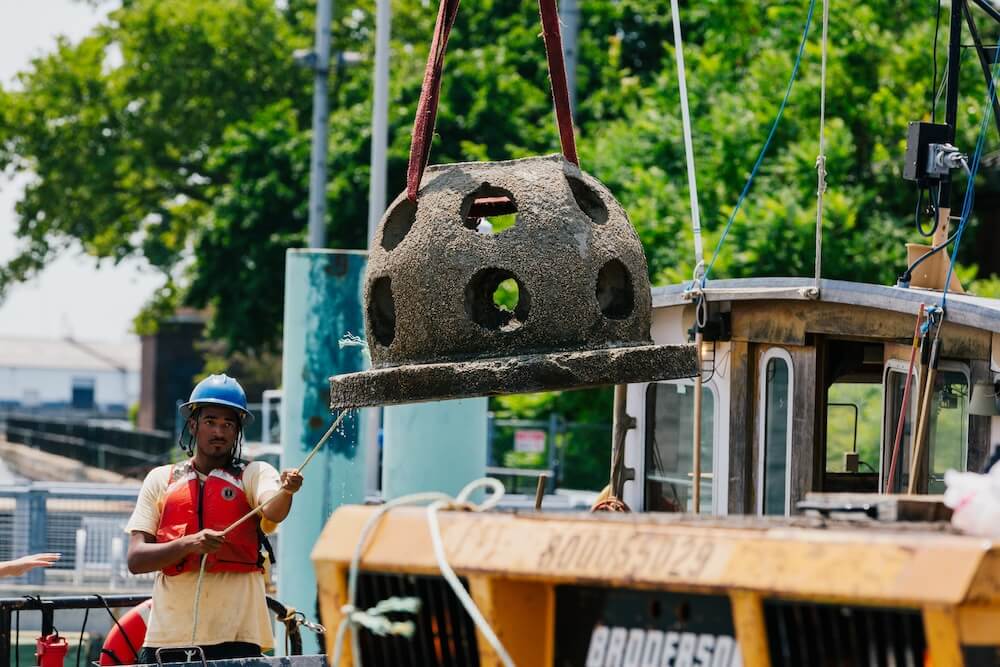
Crane lowering a concrete reef ball as a crew member steadies it with a rope

Strategic Placement

Reef substrate is transported from our remote setting facility to designed and permitted restoration sites across New York Harbor.
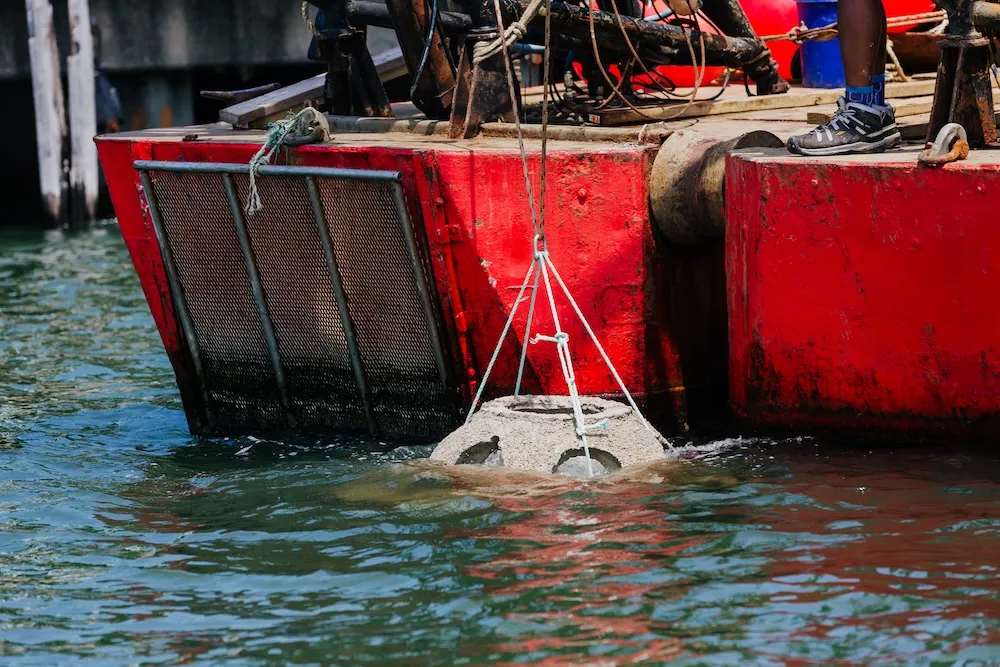
Reef ball suspended from rope slings being lowered into the water from a red barge

year zero

Once onsite, marine contractors deploy reef substrate, using cranes and divers to guide placement on the seafloor. Installation marks the beginning of a reef’s life cycle.
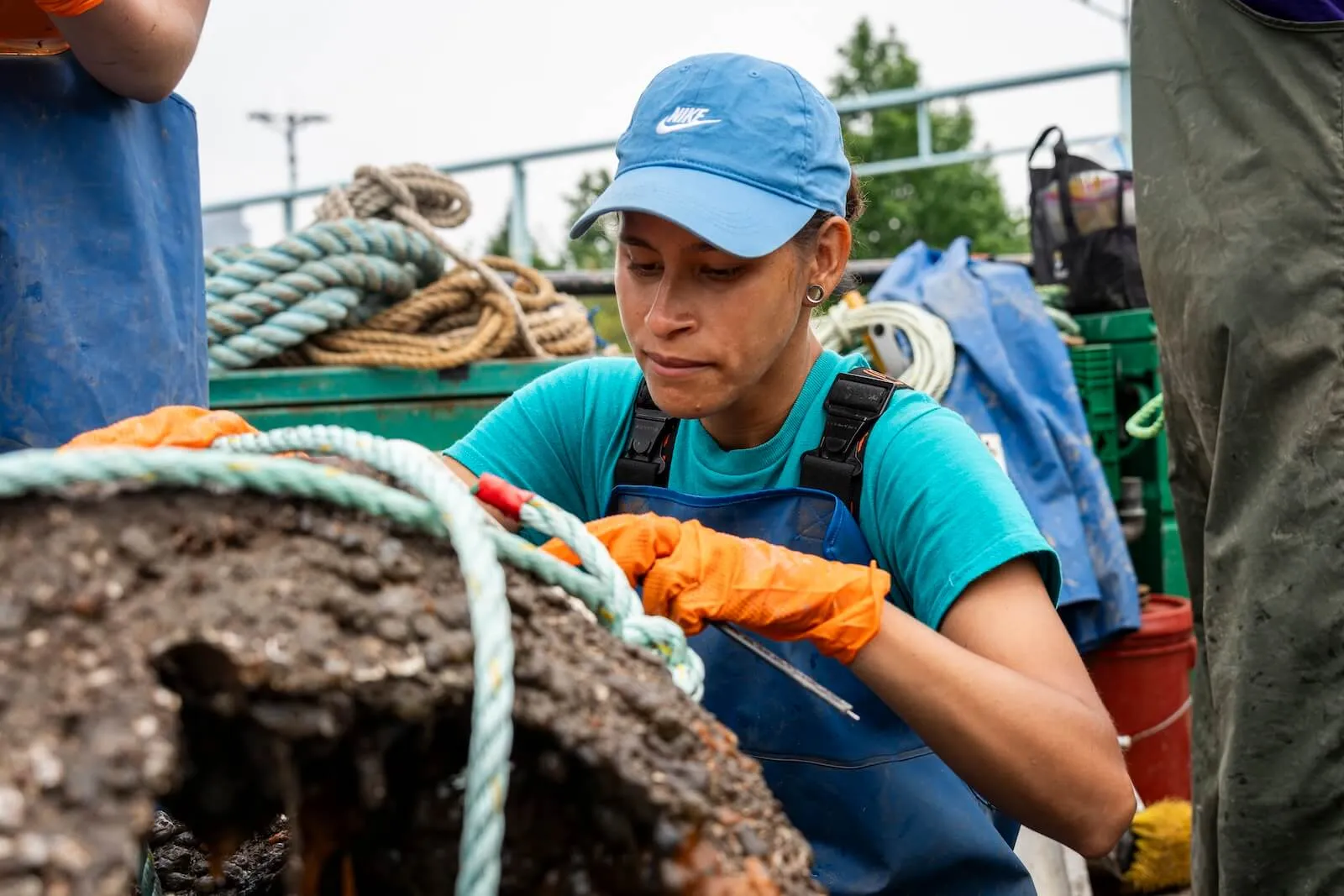
Researcher measuring oysters on a reef structure pulled from the harbor

long-term monitoring

Twice each year, our team conducts surveys and collects field data. We track oyster growth, survival, and recruitment, using that information to guide future work.
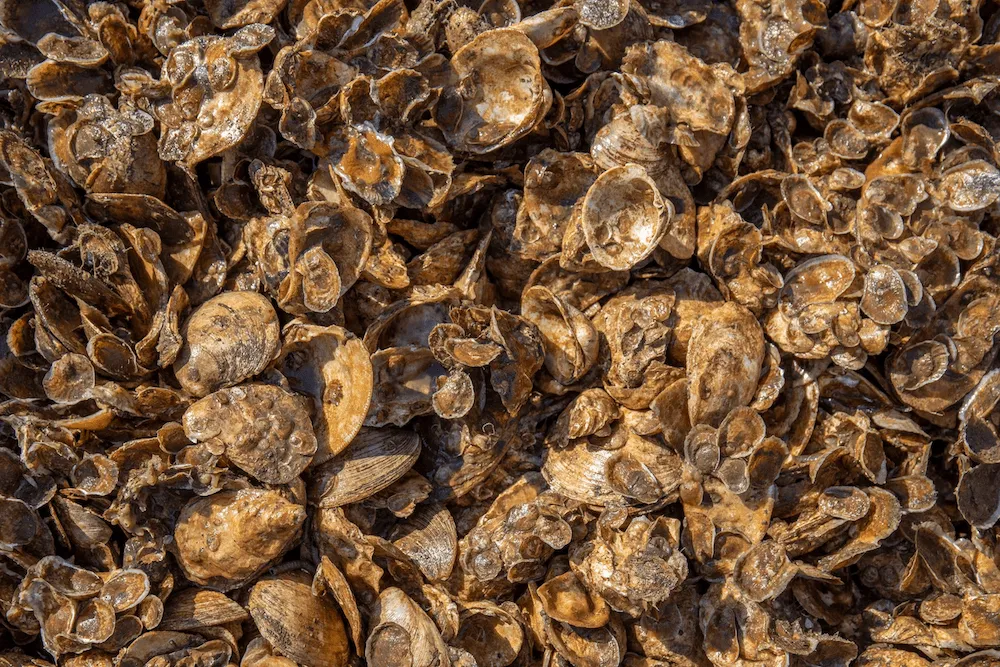
Close-up of a dense pile of weathered oyster shells

what we're looking for

We look for evidence of oyster reproduction, growth, enhanced biodiversity, and in some locations, shoreline stabilization. These are the signals that reefs are functioning as ecosystems.
06

follow the data

Data guides how restoration scales.
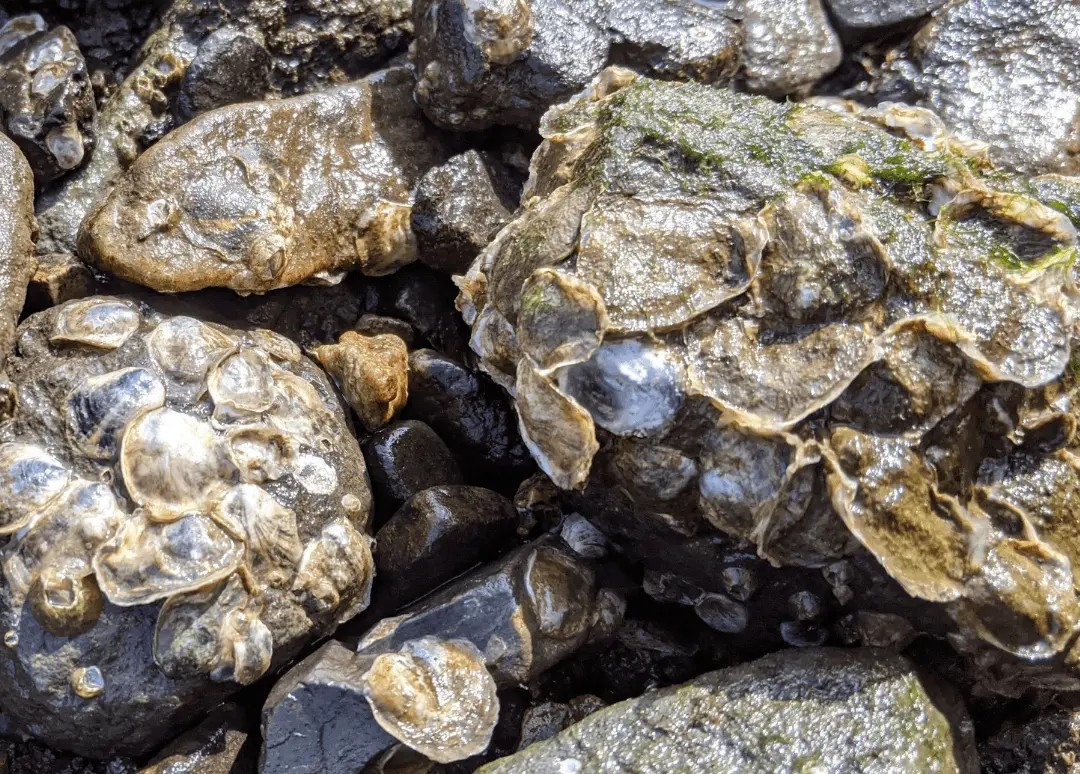
Wild oysters growing on rocks exposed at low tide

what we've proven

To date, we’ve restored more than 183 million oysters across nearly 18 acres of reef in New York Harbor. We have proven that oysters can grow and survive here. But most importantly, they have the potential to reproduce here. Through long-term monitoring, we’ve identified where they perform best and what it takes for reefs to last.

what we've proven

To date, we’ve restored more than
200000000
oysters across nearly
19
acres of reef in New York Harbor. We have proven that oysters can survive and reproduce here. But most importantly, they have the potential to develop into self-sustaining reefs. Long-term monitoring helps us identify where oysters perform best and what it takes for them to endure.
Reef ball densely covered with live oysters hauled onto a boat deck

the biological threshold

Here’s the hard truth. Small reefs are not self-sustaining. When populations are too small, mortality outpaces reproduction. That threshold has to be crossed for reefs to function as living systems. Scaling our restoration is what makes that possible.
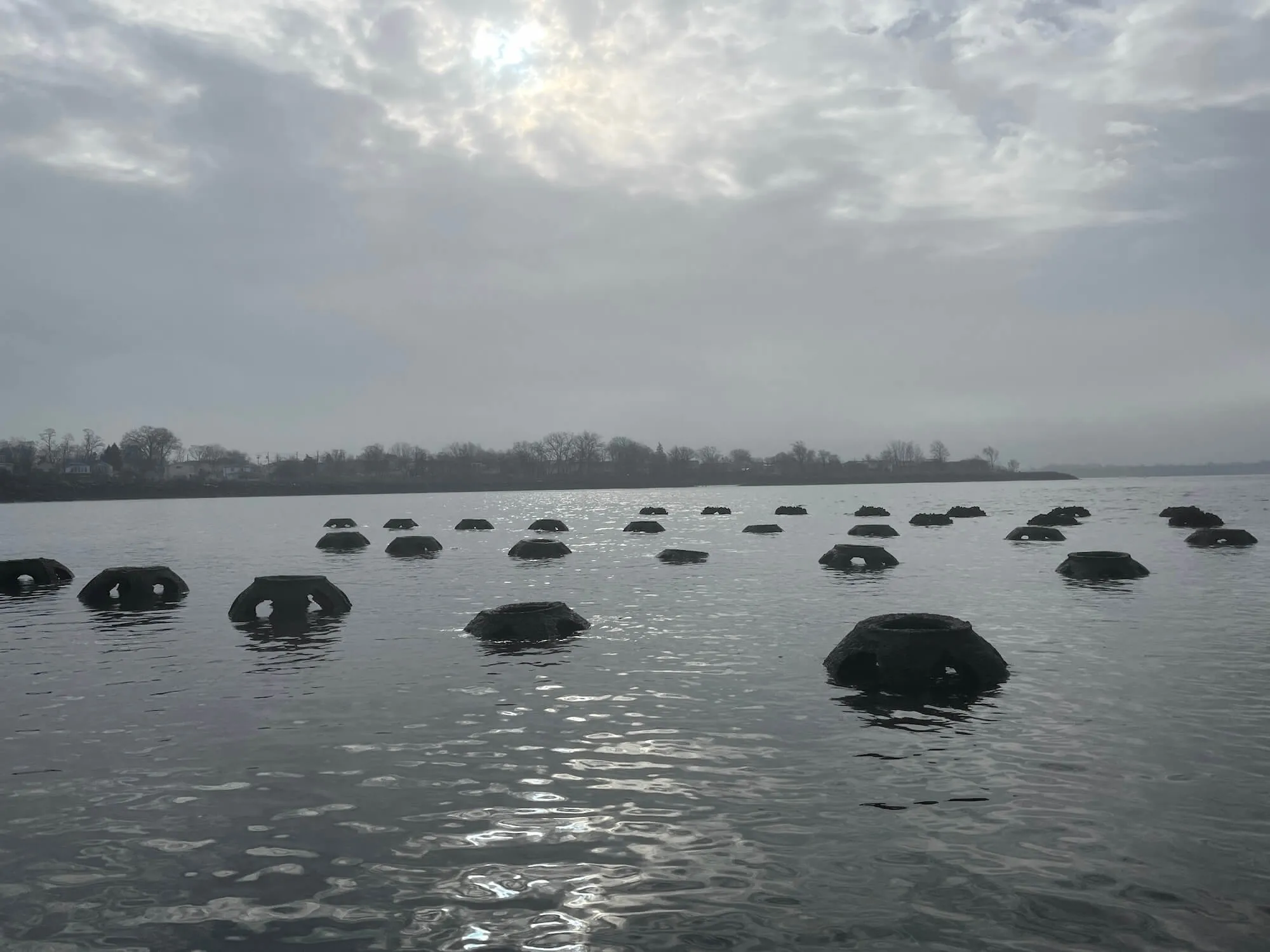
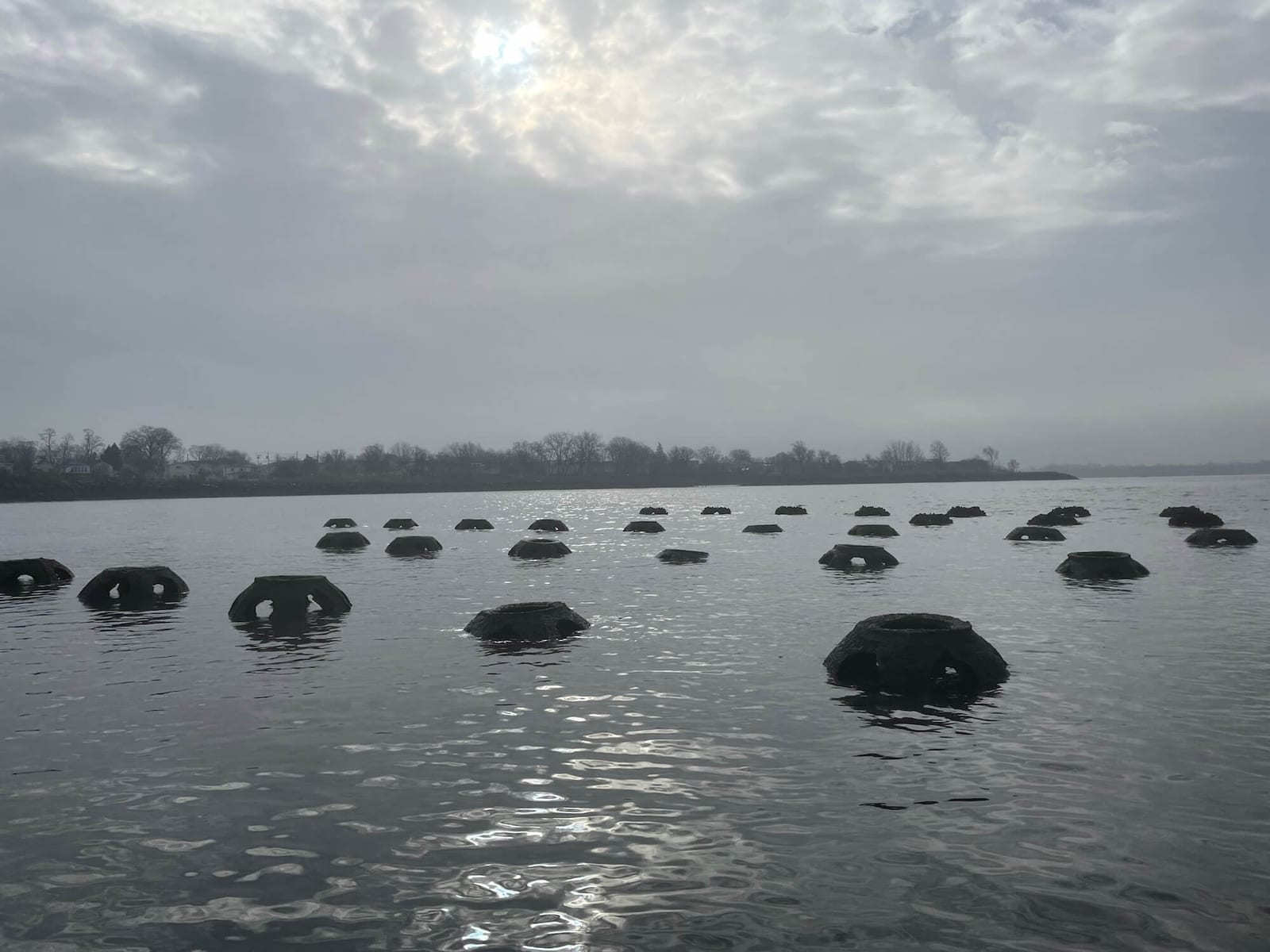
Rows of reef balls breaking the surface at low tide near the shoreline

the north star

One billion oysters by 2030 is a population-level target designed to push the harbor toward self-sustaining reef systems. When reefs can reproduce and expand without constant intervention, restoration sticks. Oysters are the starting point. Once that foundation is in place, broader ecosystem recovery can follow.

our active restoration sites

where we work

200M+
oysters restored
across 5 regions
0
Hudson River
The Battery to the Tappan Zee
+
0
Oysters introduced
245000
245000
Est. living (range)
6
Footprint (acres)
Reef sites
0
Tappan Zee
Monitoring
8
Tappan Zee
0
Stagnant
Introduced
245000
245000
Decreased
Est. living
0.14
reef area
6
acres
reef area
422 gabions, 881 unseeded bay balls
Wild recruitment site on the Hudson River. Zero oysters installed — 245k arrived naturally, validating gabions and unseeded bay balls as successful substrate.
30480000
Jamaica Bay
Enclosed Brooklyn–Queens bay
+
30480000
Oysters introduced
13824000
13824000
Est. living (range)
1
Footprint (acres)
Reef sites
30000000
Head of Bay
Active
6
Head of Bay
30000000
Increased
Introduced
13800000
13800000
Stagnant
Est. living
0.83
reef area
1
acres
reef area
4 shell mound reefs
Flagship Jamaica Bay site: 30M oysters installed with 13.8M surviving — the highest standing population in the program.
480000
Paerdegat Basin
Monitoring
7
Paerdegat Basin
480000
Stagnant
Introduced
24000
24000
Decreased
Est. living
0.002
reef area
0.05
acres
reef area
5 cabinet reefs
Jamaica Bay study site monitored since 2018. 480k oysters installed, 24k survived.
70000000
Lower Harbor / Raritan Bay
The Narrows to Sandy Hook
+
70000000
Oysters introduced
700000
3500000
Est. living (range)
Footprint (acres)
Reef sites
70000000
Living Breakwaters
Active
5
Living Breakwaters
70000000
Increased
Introduced
700000
3500000
Increased
Est. living
0.6
reef area
0.6
acres
reef area
In situ on breakwater structures
Largest single deployment in program history: 70M oysters seeded directly onto the Living Breakwaters structures off Staten Island's south shore.
45200000
Upper Harbor
Manhattan & Brooklyn waterfront
+
45200000
Oysters introduced
10508000
10508000
Est. living (range)
3.3
Footprint (acres)
Reef sites
22000000
Brooklyn Bridge Park
Active
3
Brooklyn Bridge Park
22000000
Increased
Introduced
10500000
10500000
Decreased
Est. living
0.038
reef area
2
acres
reef area
29 SEAPA cages, 105 seeded bay balls, 15 unseeded bay balls
High-visibility Upper Harbor site with 22M oysters installed and ~10.5M surviving — one of the strongest survival rates in the program.
23200000
Bush Terminal Park
Monitoring
4
Bush Terminal Park
23200000
Stagnant
Introduced
8000
8000
Decreased
Est. living
0.1176
reef area
1.3
acres
reef area
5 cabinet reefs, 120 bay balls, 90 CY shell
Legacy Upper Harbor site in Sunset Park. 1.2M oysters installed; survival has been very low, informing subsequent site selection.
57600000
Western Long Island Sound
Bronx to Queens shoreline
+
57600000
Oysters introduced
5759000
9559000
Est. living (range)
5
Footprint (acres)
Reef sites
57000000
Soundview Park
Active
1
Soundview Park
57000000
Stagnant
Introduced
5300000
9100000
Stagnant
Est. living
0.96
reef area
5
acres
reef area
600 CY shell across 10 shell mounds, 80 seeded bay balls, 160 unseeded bay balls
Active reef system in the Bronx on the Western Long Island Sound. 31M oysters installed with 5.3–9.1M surviving as of 2025.
600000
SUNY Maritime
Active
2
SUNY Maritime
600000
Increased
Introduced
459000
459000
Increased
Est. living
reef area
acres
reef area
30 Supertrays
Newly installed site at SUNY Maritime College on the Western Long Island Sound. 600K oysters installed, 459K surviving.
Explore the data
Click the map or a site below to explore our reefs and their most recent data
Soundview Park
Active reef system in the Bronx on the Western Long Island Sound. 31M oysters installed with 5.3–9.1M surviving as of 2025.
5300000
9100000
population count
5
acres
Explore site →
Brooklyn Bridge Park
High-visibility Upper Harbor site with 22M oysters installed and ~10.5M surviving — one of the strongest survival rates in the program.
10500000
population count
2
acres
Explore site →
Bush Terminal Park
Legacy Upper Harbor site in Sunset Park. 1.2M oysters installed; survival has been very low, informing subsequent site selection.
8000
population count
1.3
acres
Explore site →
Living Breakwaters
Largest single deployment in program history: 70M oysters seeded directly onto the Living Breakwaters structures off Staten Island's south shore.
700000
3500000
population count
0.6
acres
Explore site →
Head of Bay
Flagship Jamaica Bay site: 30M oysters installed with 13.8M surviving — the highest standing population in the program.
13800000
population count
1
acres
Explore site →
Paerdegat Basin
Jamaica Bay study site monitored since 2018. 480k oysters installed, 24k survived.
24000
population count
0.05
acres
Explore site →
Tappan Zee
Wild recruitment site on the Hudson River. Zero oysters installed — 245k arrived naturally, validating gabions and unseeded bay balls as successful substrate.
245000
population count
6
acres
Explore site →
VISION

Restoring one billion oysters by 2030 is a step towards restoring a self-sustaining oyster population to New York Harbor.

Illustrated aerial rendering of Liberty Reef surrounding the Statue of Liberty in New York Harbor
Image courtsesy of SCAPE.
Researcher measuring an oyster with calipers beside a cage of harvested oysters

OUR LONG-TERM IMPACT

Introducing One Billion Oysters Back to the Harbor

We are building the foundation for a self-sustaining oyster population. Alongside the reefs themselves, we are building the infrastructure required to scale restoration in a global city—from streamlined permitting pathways, to designing and operating restoration vessels and oyster production facilities, to innovating our scientific monitoring, and building a skilled workforce capable of carrying this work forward. We are proving that estuary-scale ecological restoration can happen in one of the most urbanized environments in the world.

What is a self-sustaining
oyster population?
One where oyster reefs reproduce, expand, and maintain themselves without human intervention.
donate

our progress

Are oysters surviving and growing?
Yes

Long-term monitoring confirms that oysters survive for several years and attain large shell sizes at multiple sites, including Bush Terminal Park (average shell height >160 mm), Paerdegat Basin (average shell height of nearly 100 mm), and Head of Bay (average shell height >147 mm), indicating the Harbor’s capacity to support mature, reproductively viable oysters across multiple waterbodies.

Are oysters reproducing?
Yes

Recruitment of the next generation of oysters was observed at multiple restoration sites in 2025, including Soundview, Brooklyn Bridge Park, and the Living Breakwaters. However, recruitment remains low and highly variable and does not currently outweigh mortality. As a result, restored reefs have not yet achieved self-sustaining population dynamics.

Are reefs self-sustaining?
Working on it

Results suggest that overcoming low-density reproductive limitations will require larger, multi-acre restoration projects capable of supporting high adult densities, as well as a better understanding of larval dispersal and connectivity to facilitate the development of a metapopulation across a network of restoration sites in New York Harbor.

Are reefs increasing biodiversity?
Monitoring it

In 2025, Billion Oyster Project and partners conducted over 580 minnow and sea bass trap deployments across eight sites, documenting more than 4,000 individual fish, crabs, shrimp, and other invertebrates representing 44 unique taxa. These data represent a significant advancement toward quantifying habitat use and ecological uplift associated with oyster restoration and provide a critical baseline for future assessment. Additional monitoring approaches such as eDNA and underwater video will enhance this effort. 

Science & Reports

160,748,573
Estimated total oysters restored
waterbody
introduced
est. living

Western Long Island Sound

57600000

9559000

Soundview Park

57000000

9100000

SUNY Maritime

600000

459000

Upper Harbor

45200000

10508000

Brooklyn Bridge Park

22000000

10500000

Bush Terminal Park

23200000

8000

Lower Harbor & Raritan Bay

70000000

3500000

Living Breakwaters

70000000

3500000

Jamaica Bay

30480000

13824000

Head of Bay

30000000

13800000

Paerdegat Basin

480000

24000

Hudson River

0

245000

Tappan Zee

0

245000

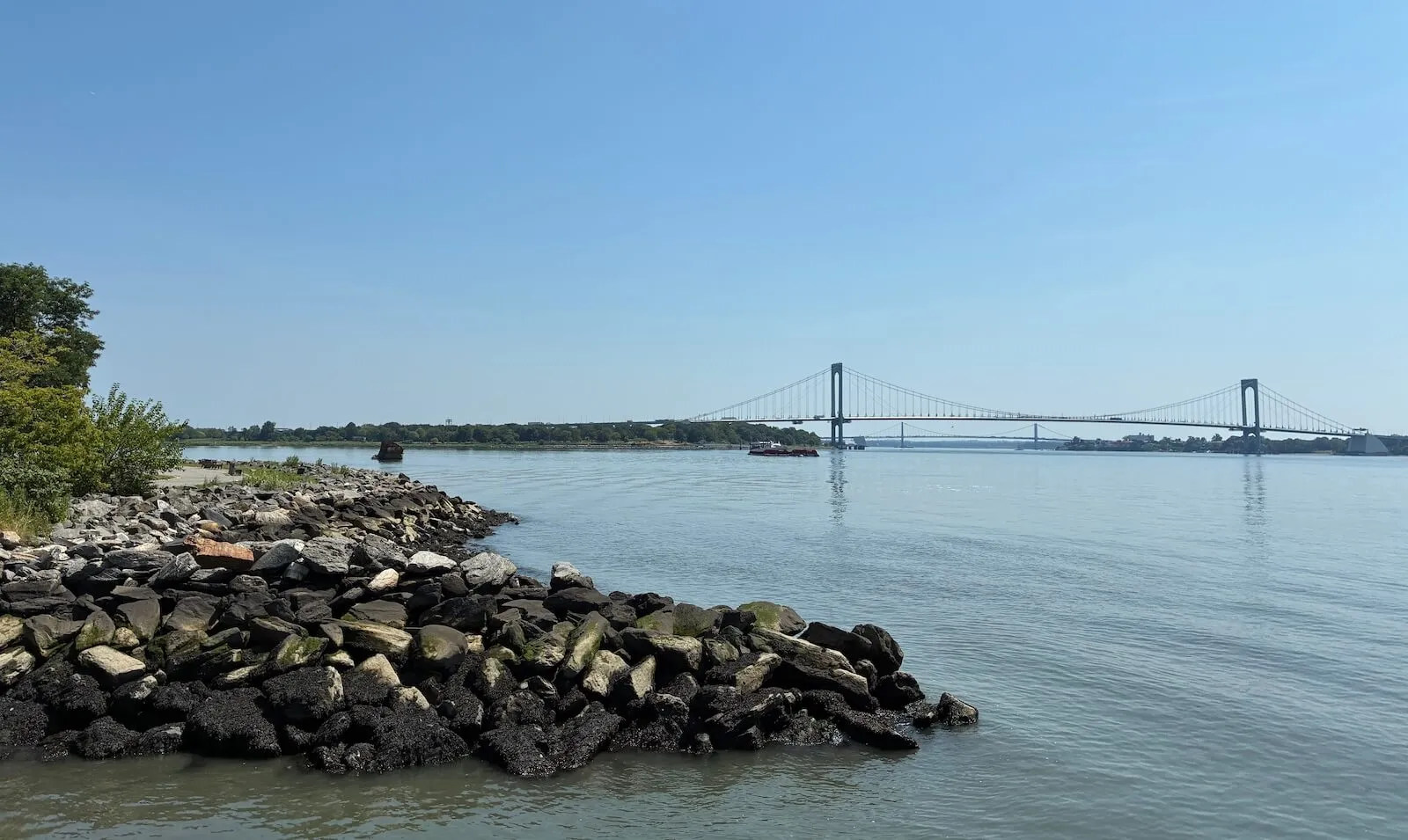
Rocky shoreline at Soundview Park with a suspension bridge spanning the water beyond
Hudson River
The Battery to the Tappan Zee
Site Overview

The Hudson River represents future opportunity more than current footprint. BOP provides monitoring support at the Tappan Zee reef and views the region — alongside Western Long Island Sound — as central to building a connected network of reefs across the estuary.

2025 Est. Living Oyster Population
245000
245000
Reef area
acres
Project Footprint
6
acres
Structures Used
881
Bay Balls
Water Body Description

The Hudson from New York Harbor north toward the Tappan Zee Bridge. BOP's role here is currently limited to post-installation monitoring support, with the river identified as a priority region for future large-scale restoration.

Observed Trends

BOP supports the Hudson River Foundation in monitoring the 2018 restored reef at the Governor Mario M. Cuomo / Tappan Zee Bridge site (these oysters were not introduced by BOP). Populations in the Hudson near Tappan Zee may serve as a larval source for future restoration in the river and Western Long Island Sound.

Sites
Tappan Zee
Monitoring
8
2018
Monitoring
Introduced
0
Est. Living
245000
245000
Structures
422 gabions, 881 unseeded bay balls
About
Wild recruitment site on the Hudson River. Zero oysters installed — 245k arrived naturally, validating gabions and unseeded bay balls as successful substrate.
Rocky shoreline at Soundview Park with a suspension bridge spanning the water beyond
Jamaica Bay
Enclosed Brooklyn–Queens bay
Site Overview

Jamaica Bay's calm, enclosed waters support some of BOP's longest-running reefs. The contrast between the maintained Head of Bay shell reef and the declining Paerdegat cabinets illustrates how structure type and reseeding shape long-term outcomes.

2025 Est. Living Oyster Population
13824000
13824000
Reef area
acres
Project Footprint
1
acres
Structures Used
4
Shell Mounds
Water Body Description

An enclosed bay along the southern Brooklyn and Queens shoreline, sheltered by the Rockaway Peninsula and Gateway National Recreation Area. BOP monitors shell-mound and cabinet reefs at Head of Bay and Paerdegat Basin.

Observed Trends

Head of Bay remains BOP's highest standing population in Jamaica Bay, sustained through reseeding of its shell-mound reefs, with positive growth and large shell sizes (>147 mm) — though no wild recruitment was recorded in 2025. Paerdegat Basin's cabinet reef has declined under high mortality; the cabinets will be removed and a new multi-phase reef is planned.

Sites
Head of Bay
Active
6
2016–2025
Active
Introduced
30000000
Est. Living
13800000
13800000
Structures
4 shell mound reefs
About
Flagship Jamaica Bay site: 30M oysters installed with 13.8M surviving — the highest standing population in the program.
Paerdegat Basin
Monitoring
7
2018
Monitoring
Introduced
480000
Est. Living
24000
24000
Structures
5 cabinet reefs
About
Jamaica Bay study site monitored since 2018. 480k oysters installed, 24k survived.
Rocky shoreline at Soundview Park with a suspension bridge spanning the water beyond
Lower Harbor & Raritan Bay
The Narrows to Sandy Hook
Site Overview

Lower Harbor & Raritan Bay is anchored by the Living Breakwaters, a landscape-scale project pairing shoreline protection with oyster habitat. It marks BOP's transition from pilot-scale reefs to the multi-acre installations needed for ecosystem-level impact.

2025 Est. Living Oyster Population
700000
3500000
Reef area
acres
Project Footprint
acres
Structures Used
Water Body Description

The outer harbor from the Narrows south to Sandy Hook and west into Raritan Bay, including Staten Island's south shore. Home to the Living Breakwaters, BOP's largest single oyster deployment.

Observed Trends

In 2025 BOP seeded roughly 70M oysters directly onto the Living Breakwaters structures off Staten Island — the largest single deployment in program history. Early monitoring shows positive growth with low but consistent recruitment, and in-situ trials are underway to evaluate the performance and scalability of the approach.

Sites
Living Breakwaters
Active
5
2025
Active
Introduced
70000000
Est. Living
700000
3500000
Structures
In situ on breakwater structures
About
Largest single deployment in program history: 70M oysters seeded directly onto the Living Breakwaters structures off Staten Island's south shore.
Rocky shoreline at Soundview Park with a suspension bridge spanning the water beyond
Upper Harbor
Manhattan & Brooklyn waterfront
Site Overview

The Upper Harbor is where BOP's multi-phase restoration approach is most visible. Brooklyn Bridge Park demonstrates that reseeding and multiple cohorts can sustain large populations in a busy urban estuary, while Bush Terminal's results have guided the shift toward larger subtidal reefs.

2025 Est. Living Oyster Population
10508000
10508000
Reef area
acres
Project Footprint
3.3
acres
Structures Used
240
Bay Balls
29
Cages
Water Body Description

The inner harbor between Lower Manhattan, the Brooklyn waterfront, and the New Jersey shore. BOP's most concentrated cluster of monitoring sites, including the high-visibility Brooklyn Bridge Park reefs and the Bush Terminal Park lagoon field station.

Observed Trends

Brooklyn Bridge Park maintained roughly 10.5M oysters across multiple structures in 2025 — one of the strongest survival records in the program — with wild recruitment observed. Bush Terminal Park's older cabinet structures continued to show very low survival, informing the design of a new 1.3-acre subtidal reef permitted for 2026.

Sites
Brooklyn Bridge Park
Active
3
2020–2025
Active
Introduced
22000000
Est. Living
10500000
10500000
Structures
29 SEAPA cages, 105 seeded bay balls, 15 unseeded bay balls
About
High-visibility Upper Harbor site with 22M oysters installed and ~10.5M surviving — one of the strongest survival rates in the program.
Bush Terminal Park
Monitoring
4
2016–2026
Monitoring
Introduced
23200000
Est. Living
8000
8000
Structures
5 cabinet reefs, 120 bay balls, 90 CY shell
About
Legacy Upper Harbor site in Sunset Park. 1.2M oysters installed; survival has been very low, informing subsequent site selection.
Rocky shoreline at Soundview Park with a suspension bridge spanning the water beyond
Western Long Island Sound
Bronx to Queens shoreline
Site Overview

Western Long Island Sound is the frontier of BOP's restoration footprint. Strong adult survival and repeated wild recruitment at Soundview Park show the Harbor's capacity to support reproductively viable reefs, making the region a focus for the larger, multi-acre projects needed to reach self-sustaining populations.

2025 Est. Living Oyster Population
5759000
9559000
Reef area
0.96
acres
Project Footprint
5
acres
Structures Used
240
Bay Balls
10
Shell Mounds
Water Body Description

The western reach of Long Island Sound, fringing the Bronx and Westchester shoreline across to the Queens and Nassau County coast. One of BOP's priority regions for scaling up restoration, anchored by the long-running Soundview Park reef and the newly installed SUNY Maritime College nursery.

Observed Trends

Soundview Park sustained a large multi-cohort population (5.3–9.1M oysters in 2025) through periodic reseeding, and was again one of the few sites where wild recruitment was documented. Growth is positive but mortality remains high, and recruitment is not yet sufficient to offset it. The SUNY Maritime nursery, installed in 2025, is performing well in its first season.

Sites
Soundview Park
Active
1
2020–2026
Active
Introduced
57000000
Est. Living
5300000
9100000
Structures
600 CY shell across 10 shell mounds, 80 seeded bay balls, 160 unseeded bay balls
About
Active reef system in the Bronx on the Western Long Island Sound. 31M oysters installed with 5.3–9.1M surviving as of 2025.
SUNY Maritime
Active
2
2025
Active
Introduced
600000
Est. Living
459000
459000
Structures
30 Supertrays
About
Newly installed site at SUNY Maritime College on the Western Long Island Sound. 600K oysters installed, 459K surviving.
2014
2016
2019
2024
2025
Gloved worker tending oysters growing on a recovered reef cage
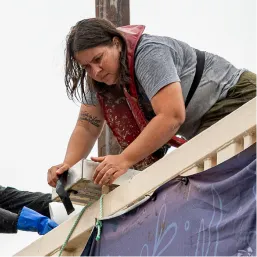
Crew member in a life vest leaning over a barge edge to secure a strap
Gloved worker tending oysters growing on a recovered reef cage
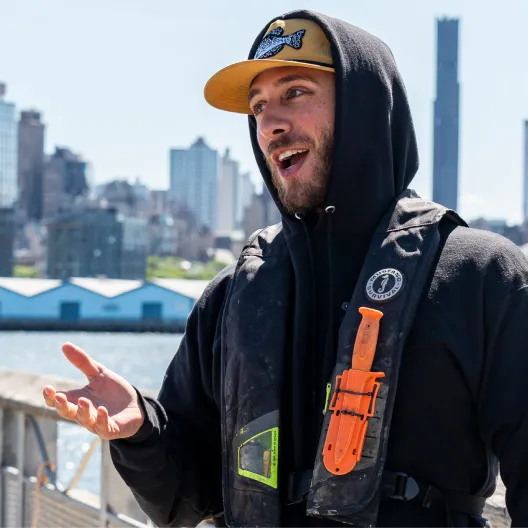
Smiling crew member in a life vest speaking on a dock with the city skyline behind
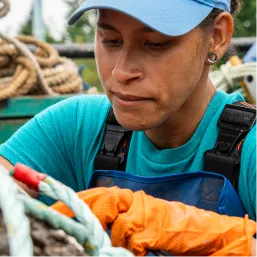
Field technician in gloves hauling a rope aboard a work vessel
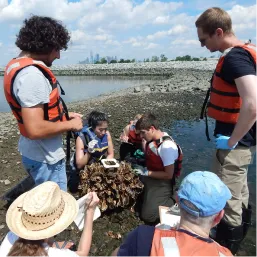
Volunteers in life vests examining oyster cages on a rocky shoreline at low tide
Field technician in gloves hauling a rope aboard a work vessel
Smiling crew member in a life vest speaking on a dock with the city skyline behind