

Overview
Core Practices
What Students Do
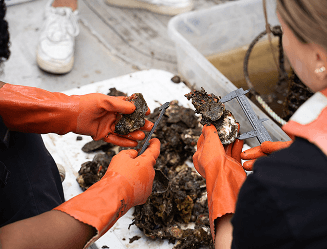
- learn why oysters are keystone species in New York Harbor
- practice scientific observation, inference, and prediction
- prepare for fieldwork through classroom activities
- conduct two guided ORS field visits
- collect data on oysters and associated organisms
- analyze and summarize field observations
- develop and refine research questions
- compare ecosystem changes between visits
Pacing & Logistics
Classroom Preparation
Multiple lessons occur before the first field visit to build background knowledge and observation skills.
Field Visits
Students visit their Oyster Research Station twice during the investigation.
Typical visit duration: 1.5–2 hours per visit.
Visits may occur on the same day OR across multiple shorter visits depending on scheduling and site access.
Flexibility
Lessons may be adapted depending on your scheduling constraints, weather conditions, site access, and student pacing.
Field activities follow structured protocols but support student-led inquiry.
Learning Standards
Materials
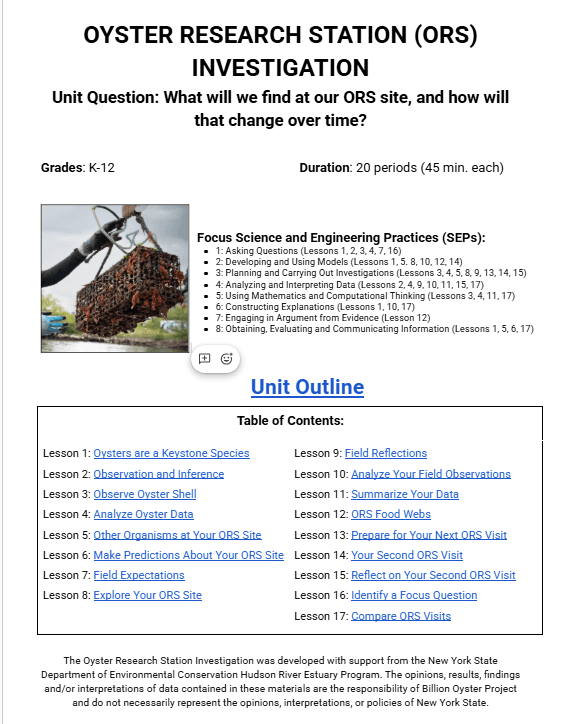
LESSONS
4
chapters
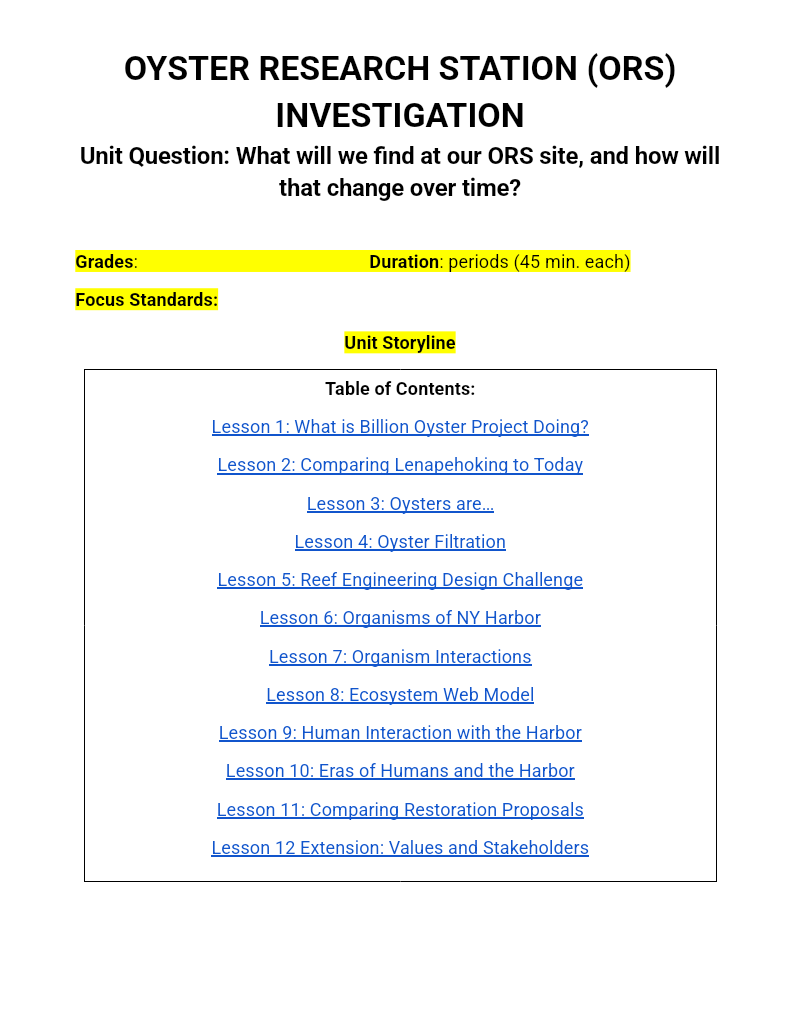
Setting the Stage
Classroom preparation building background knowledge on oysters as keystone species, scientific observation skills, and prediction-making before the first field visit.

Lesson
:
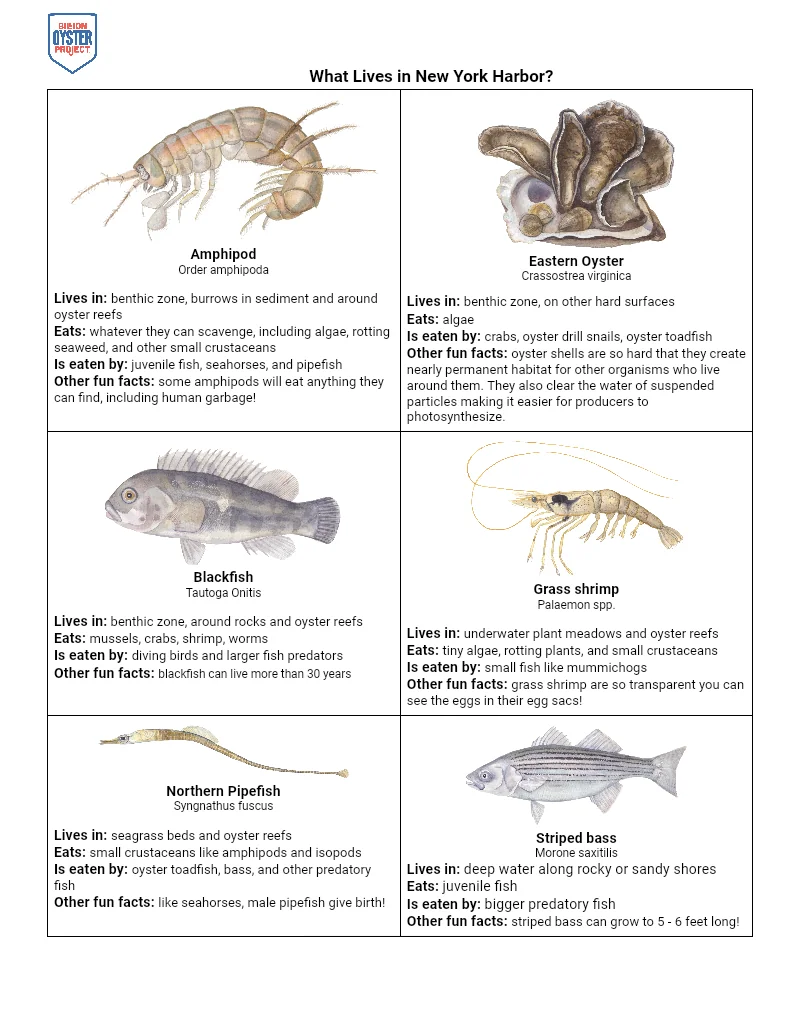
Oysters are a Keystone Species


Did you enjoy teaching this lesson?
Thanks! Any additional thoughts?
Materials & Quick Links
Sign up to access lesson content
Create free teacher credentials to access full lesson plans, downloadable materials, and teaching resources for your classroom.
Setting the Stage
Classroom preparation building background knowledge on oysters as keystone species, scientific observation skills, and prediction-making before the first field visit.
Lesson
:
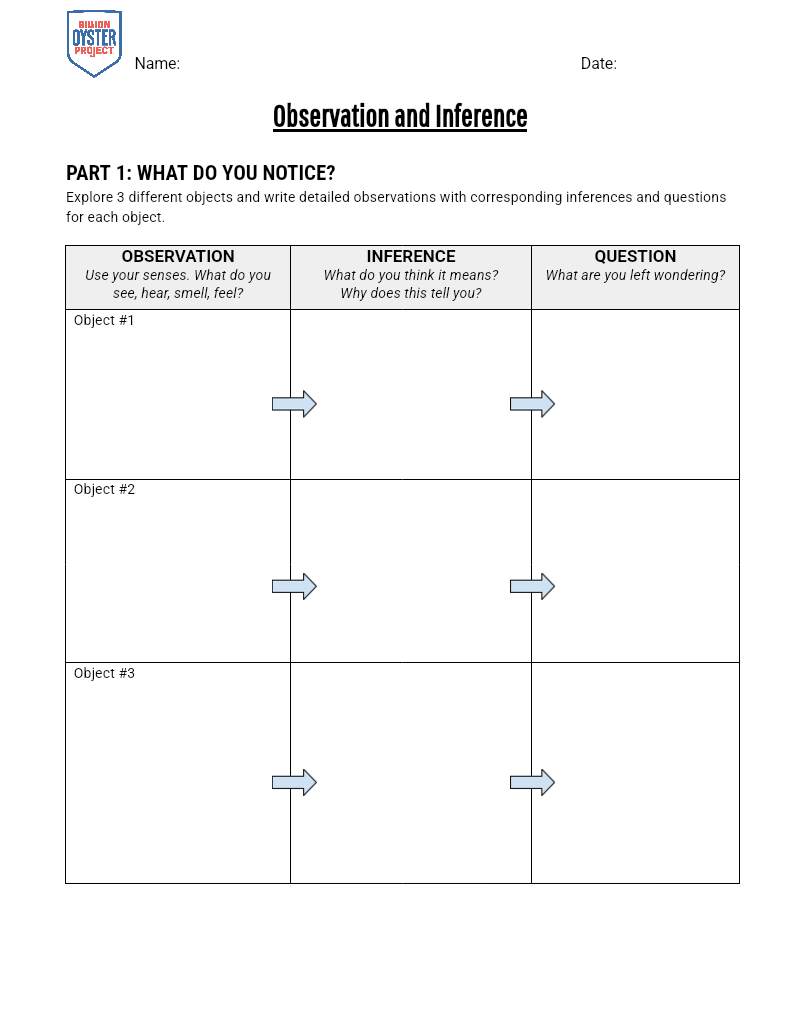
Observation and Inference
Did you enjoy teaching this lesson?
Thanks! Any additional thoughts?
Materials & Quick Links
Sign up to access lesson content
Create free teacher credentials to access full lesson plans, downloadable materials, and teaching resources for your classroom.
Setting the Stage
Classroom preparation building background knowledge on oysters as keystone species, scientific observation skills, and prediction-making before the first field visit.
Lesson
:
Observe Oyster Shell
Did you enjoy teaching this lesson?
Thanks! Any additional thoughts?
Materials & Quick Links
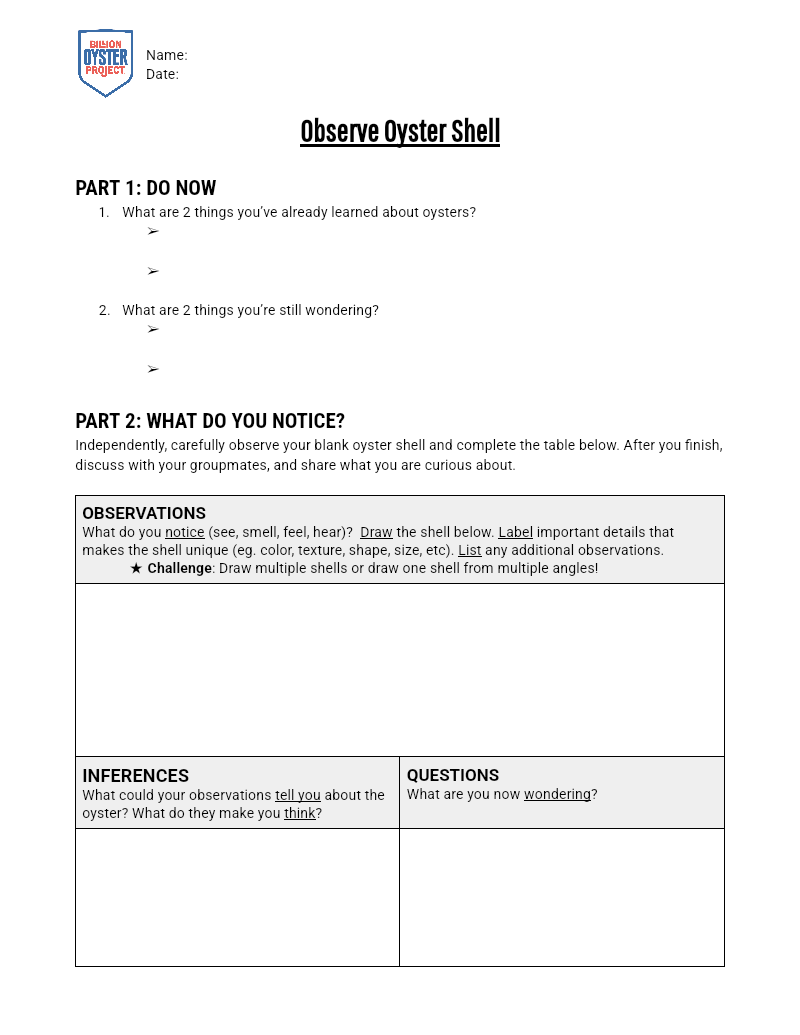
Sign up to access lesson content
Create free teacher credentials to access full lesson plans, downloadable materials, and teaching resources for your classroom.
Setting the Stage
Classroom preparation building background knowledge on oysters as keystone species, scientific observation skills, and prediction-making before the first field visit.
Lesson
:
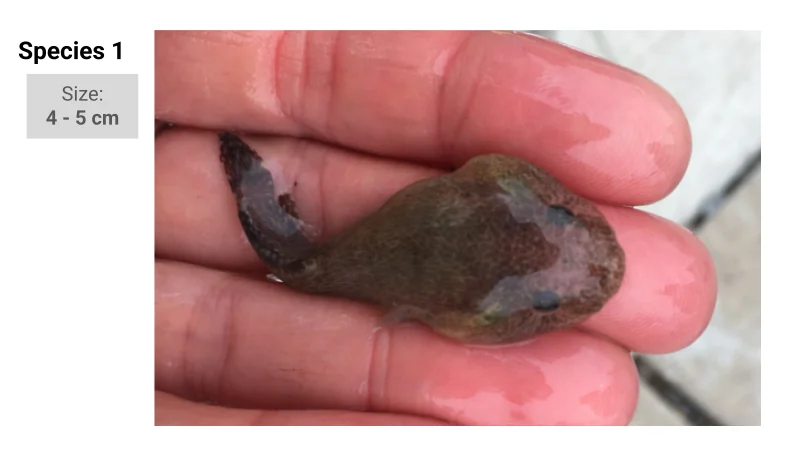
Other Organisms at Your ORS Site
Did you enjoy teaching this lesson?
Thanks! Any additional thoughts?
Materials & Quick Links
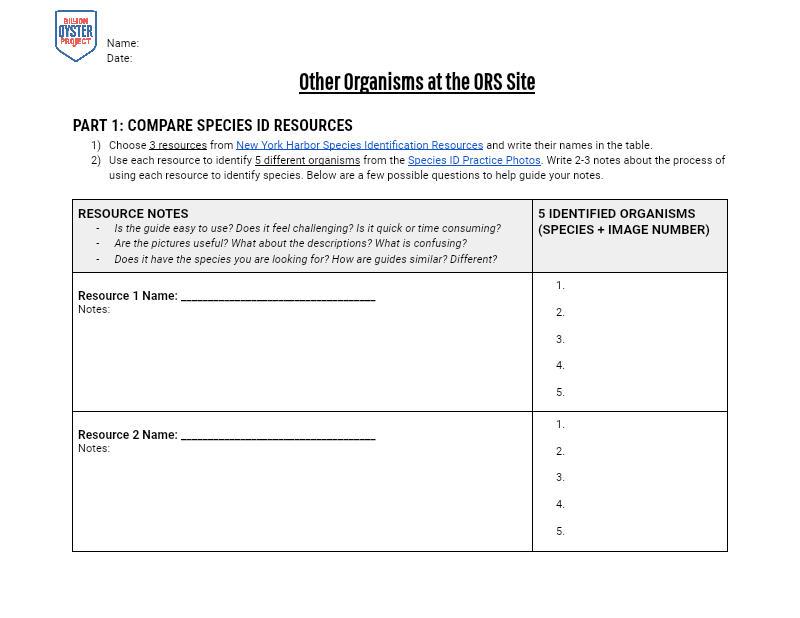
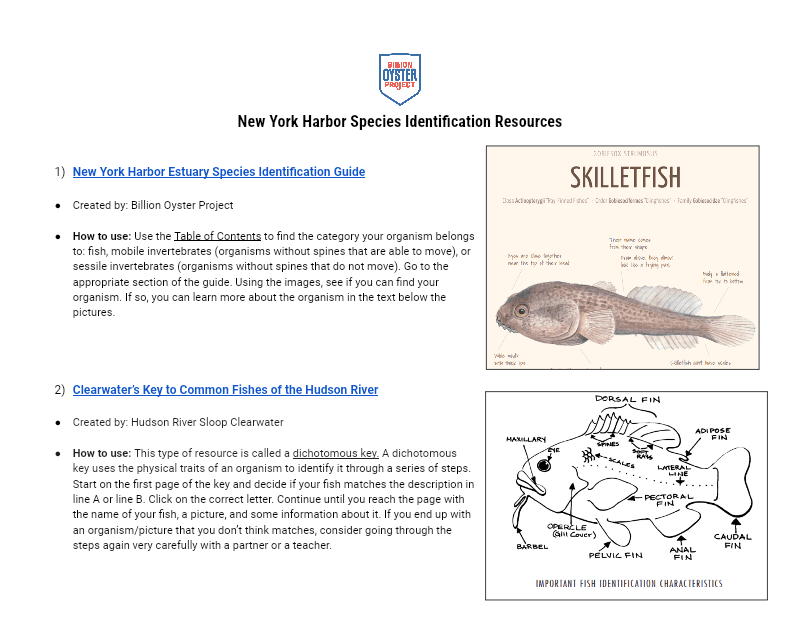
Sign up to access lesson content
Create free teacher credentials to access full lesson plans, downloadable materials, and teaching resources for your classroom.
Setting the Stage
Classroom preparation building background knowledge on oysters as keystone species, scientific observation skills, and prediction-making before the first field visit.
Lesson
:
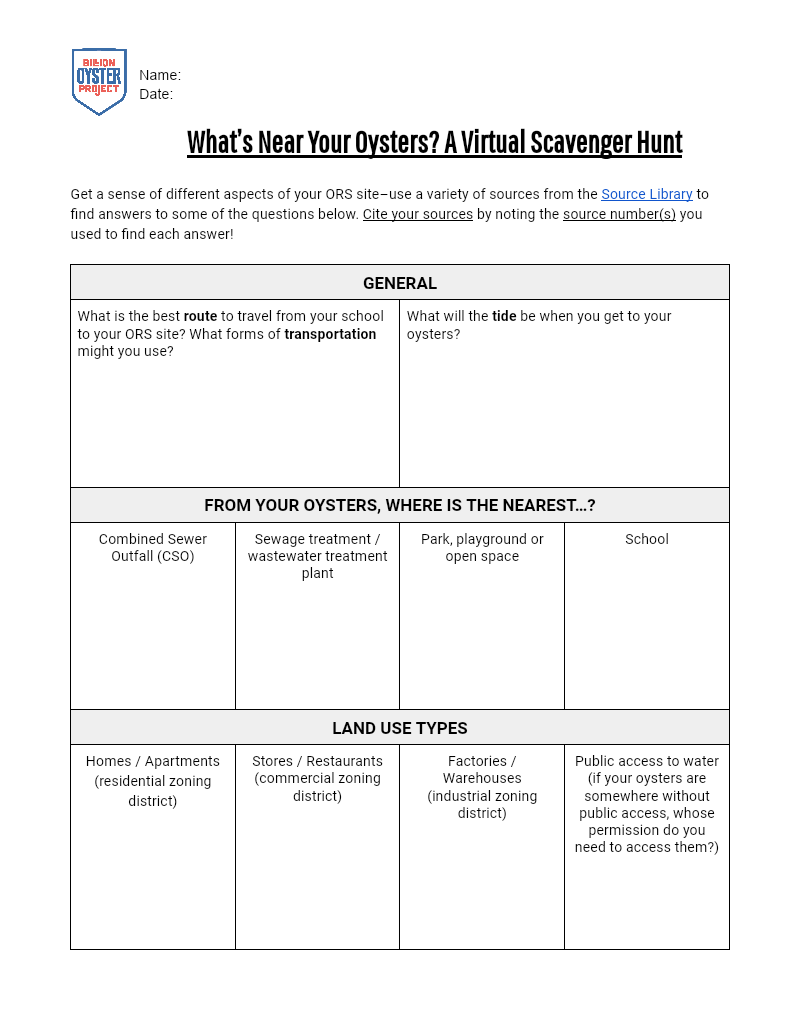
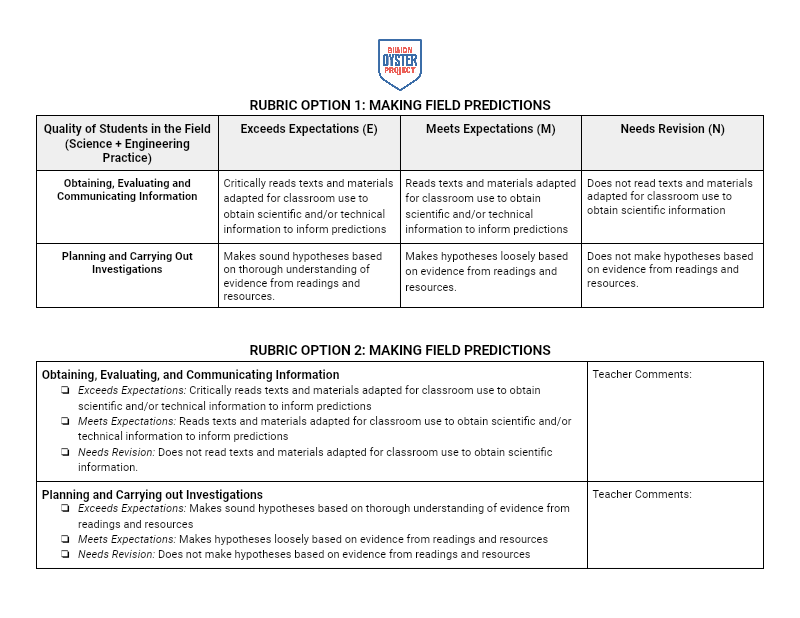
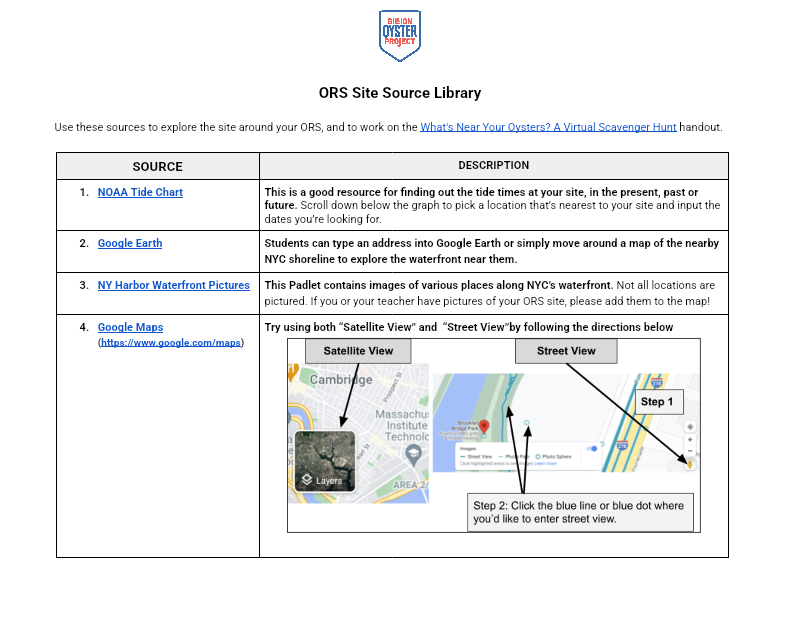
Make and Refine Predictions about your ORS Site
Did you enjoy teaching this lesson?
Thanks! Any additional thoughts?
Materials & Quick Links
Sign up to access lesson content
Create free teacher credentials to access full lesson plans, downloadable materials, and teaching resources for your classroom.
Your First ORS Visit
Students conduct their first guided visit to an Oyster Research Station, collecting baseline data on oyster growth and associated organisms.
Lesson
:
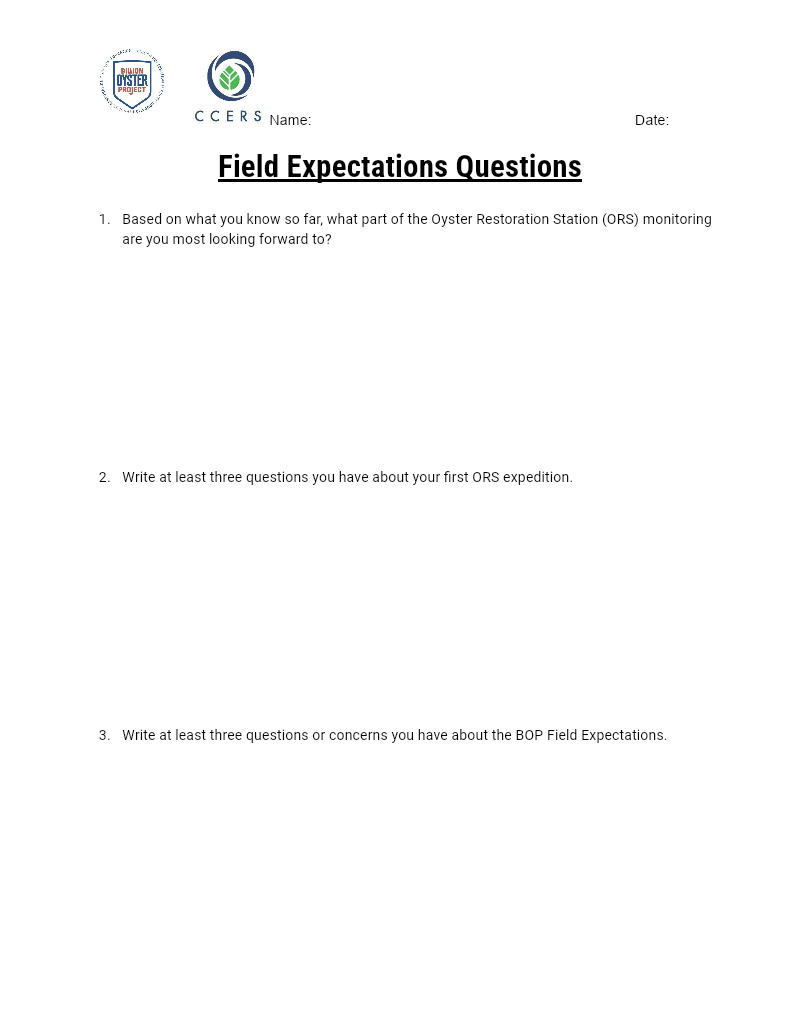
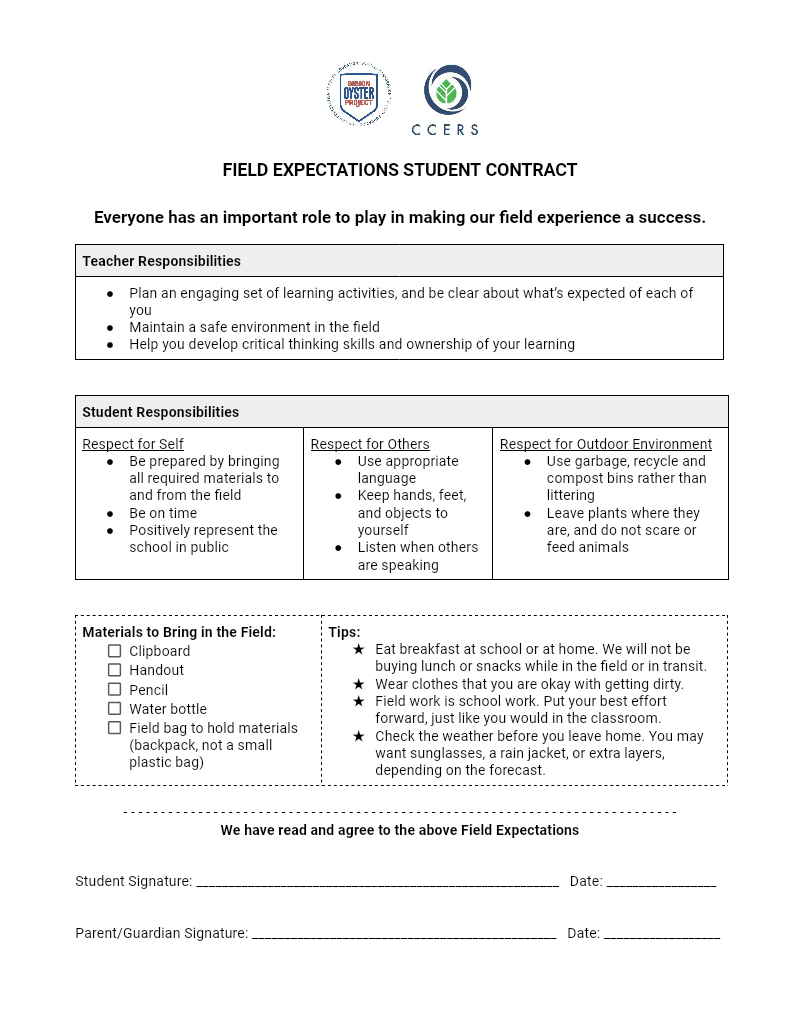
Field Expectations
Did you enjoy teaching this lesson?
Thanks! Any additional thoughts?
Materials & Quick Links
Sign up to access lesson content
Create free teacher credentials to access full lesson plans, downloadable materials, and teaching resources for your classroom.
Your First ORS Visit
Students conduct their first guided visit to an Oyster Research Station, collecting baseline data on oyster growth and associated organisms.
Lesson
:
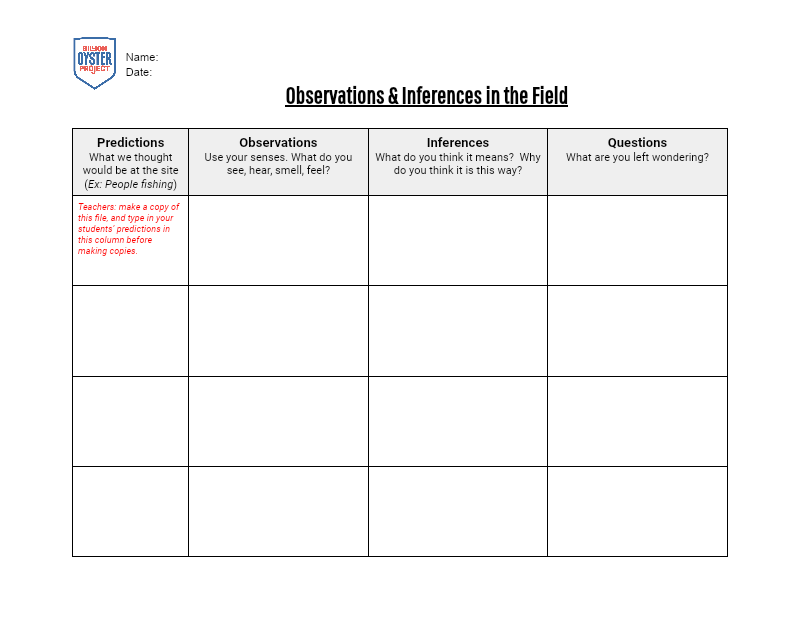
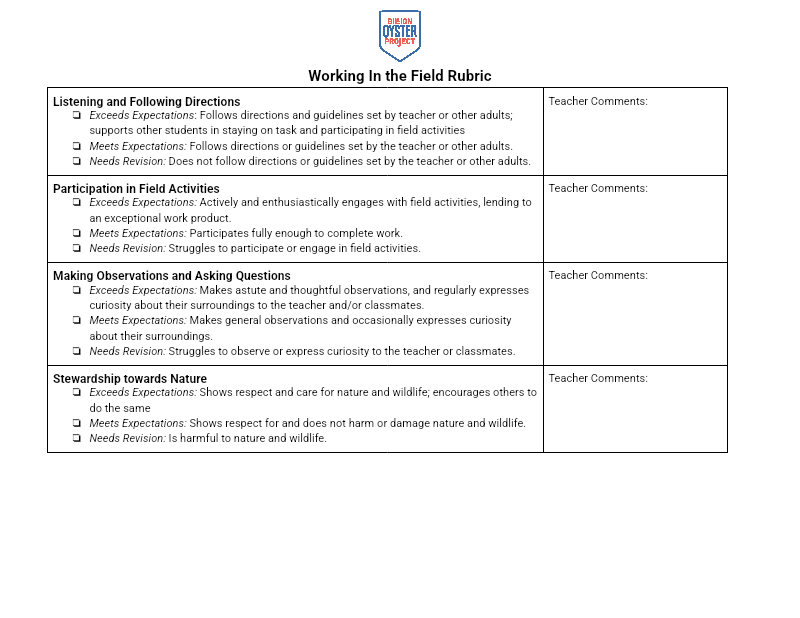
Explore Your ORS Site
Did you enjoy teaching this lesson?
Thanks! Any additional thoughts?
Materials & Quick Links
Sign up to access lesson content
Create free teacher credentials to access full lesson plans, downloadable materials, and teaching resources for your classroom.
Your First ORS Visit
Students conduct their first guided visit to an Oyster Research Station, collecting baseline data on oyster growth and associated organisms.
Lesson
:
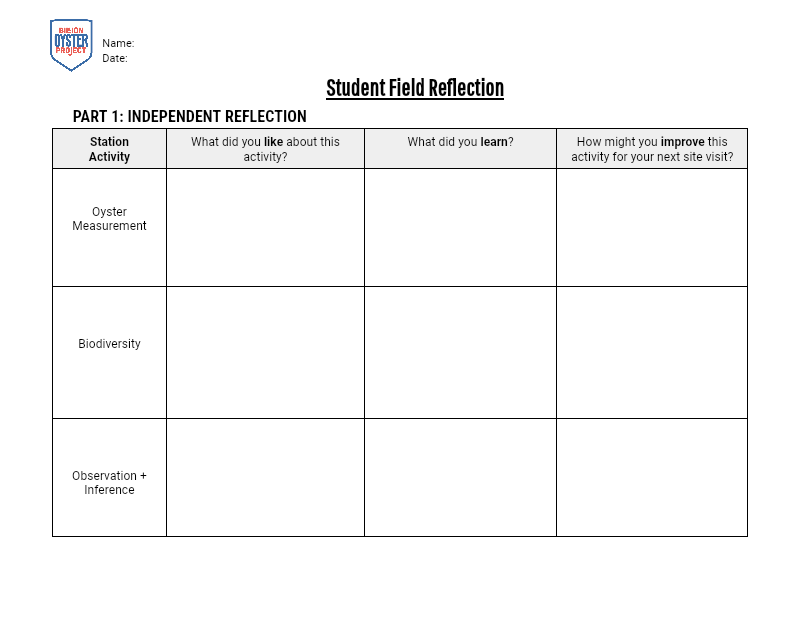
Field Reflections
Did you enjoy teaching this lesson?
Thanks! Any additional thoughts?
Materials & Quick Links
Sign up to access lesson content
Create free teacher credentials to access full lesson plans, downloadable materials, and teaching resources for your classroom.
Think Deeper About your Field Visit
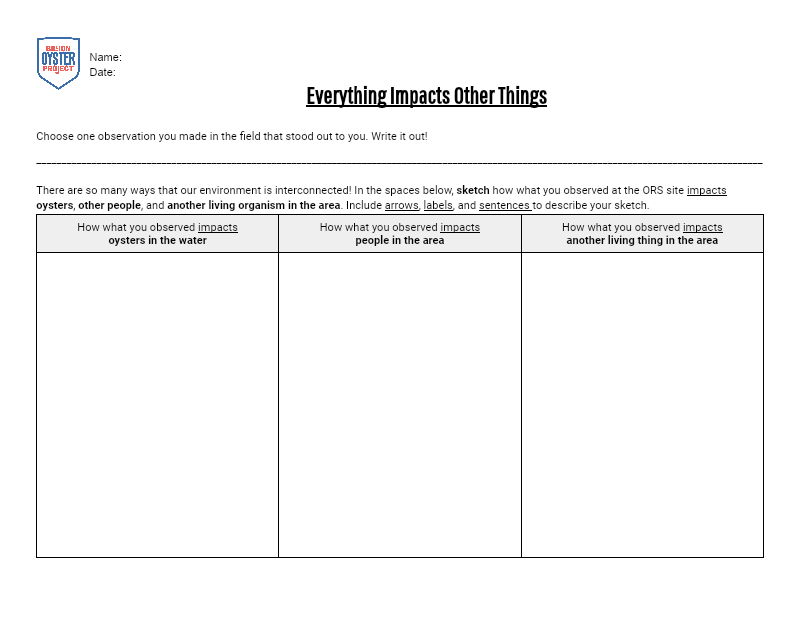
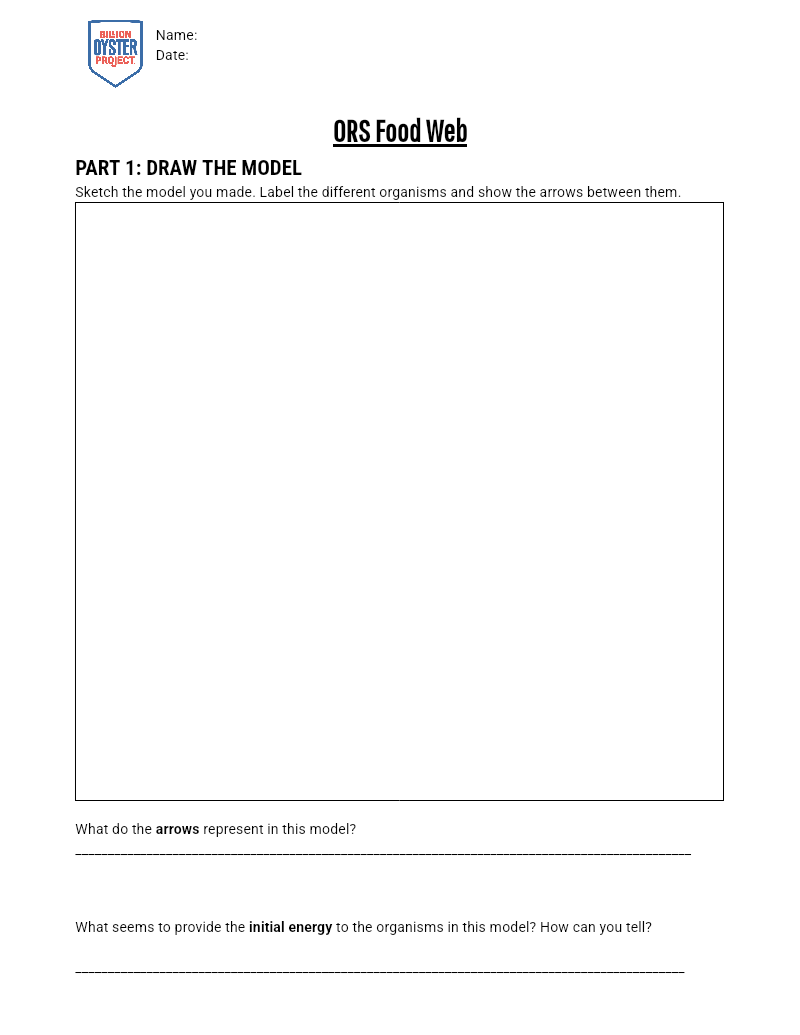
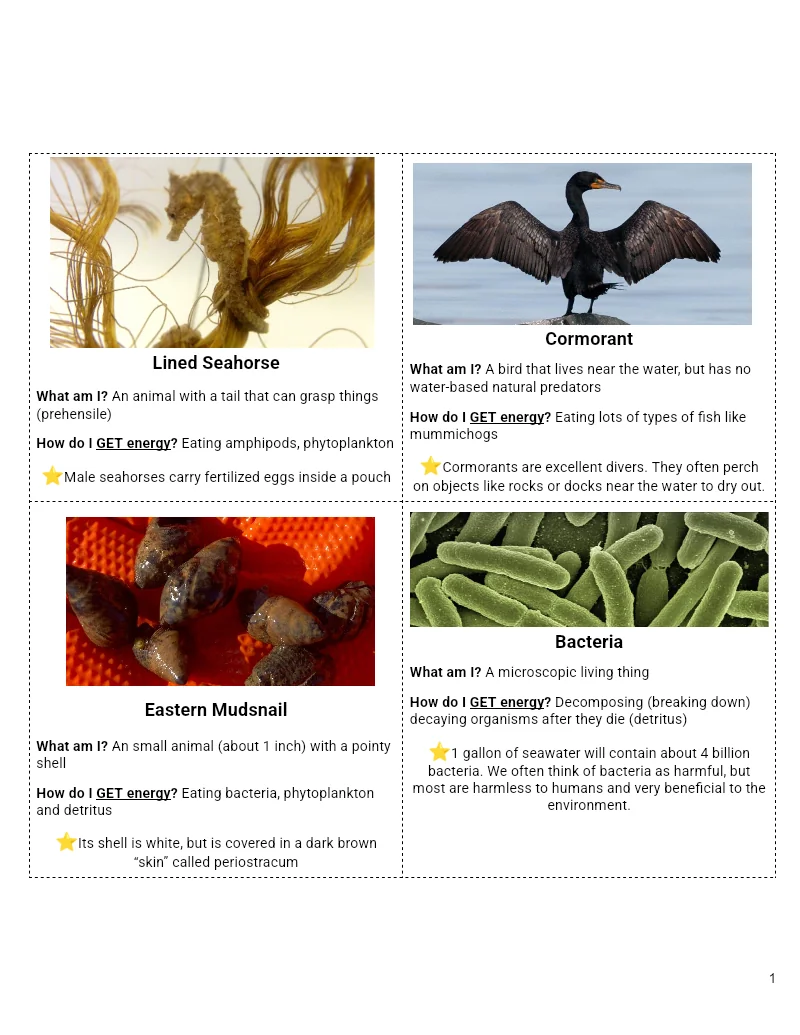
Back in the classroom, students analyze their field observations, summarize their oyster data, and model the food web connections at their ORS site.
Lesson
:
Analyze Your Field Observations
Did you enjoy teaching this lesson?
Thanks! Any additional thoughts?
Materials & Quick Links
Sign up to access lesson content
Create free teacher credentials to access full lesson plans, downloadable materials, and teaching resources for your classroom.
Think Deeper About your Field Visit
Back in the classroom, students analyze their field observations, summarize their oyster data, and model the food web connections at their ORS site.
Lesson
:
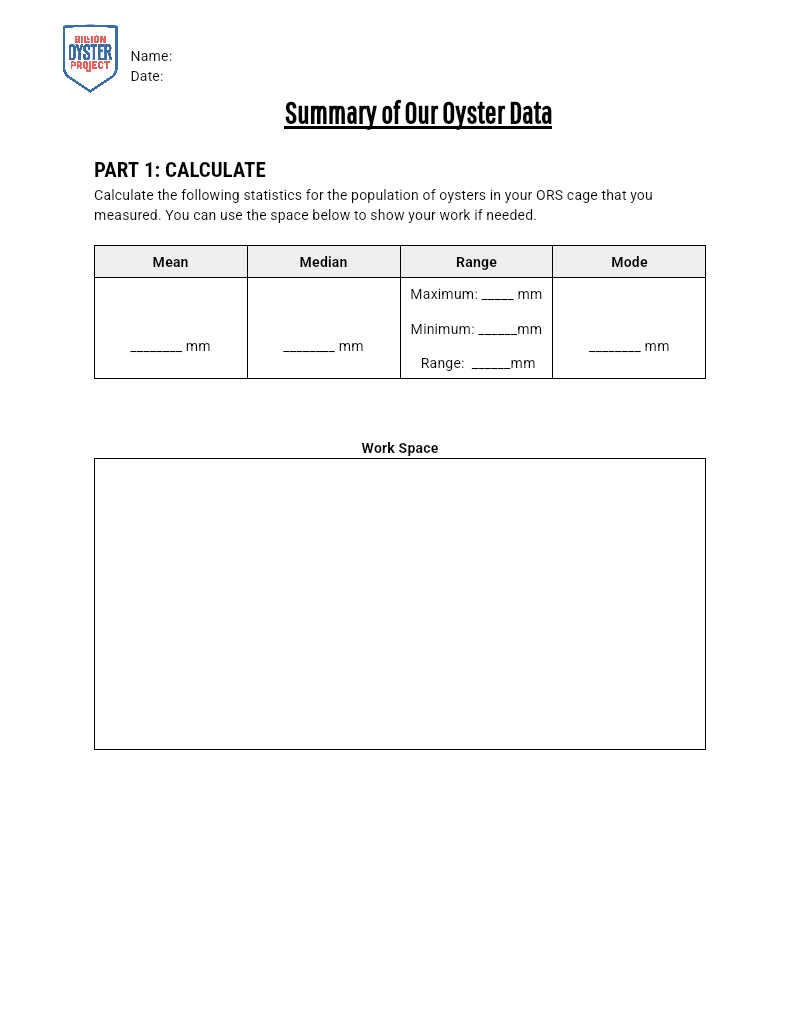
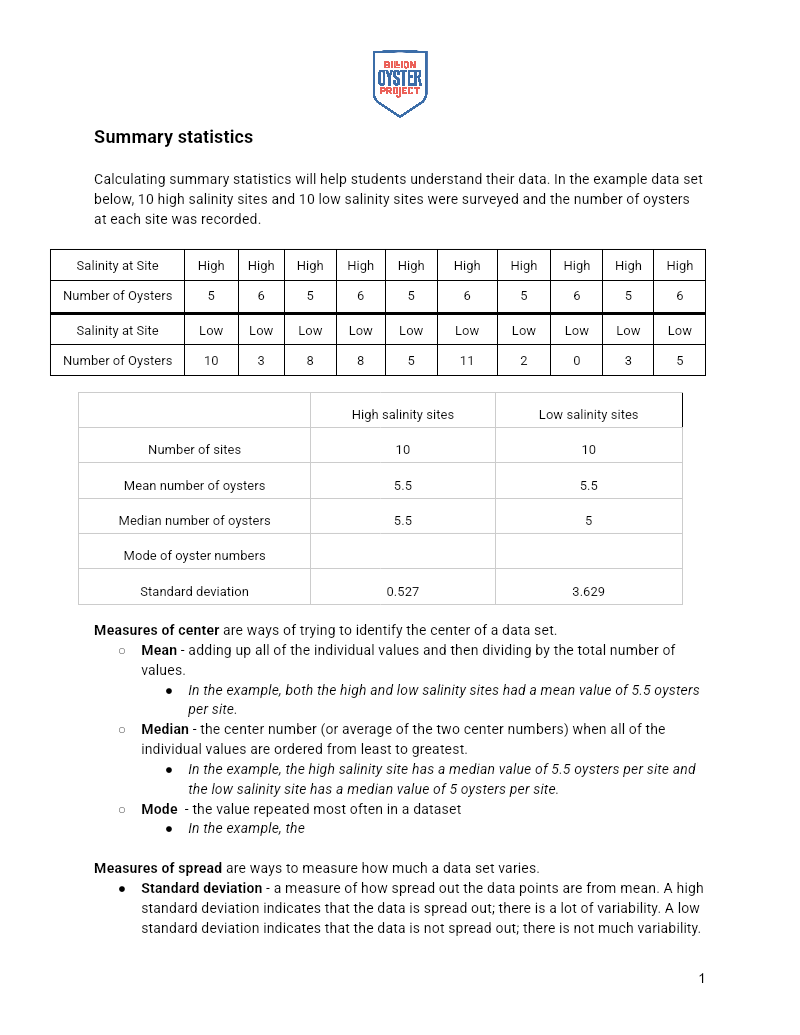
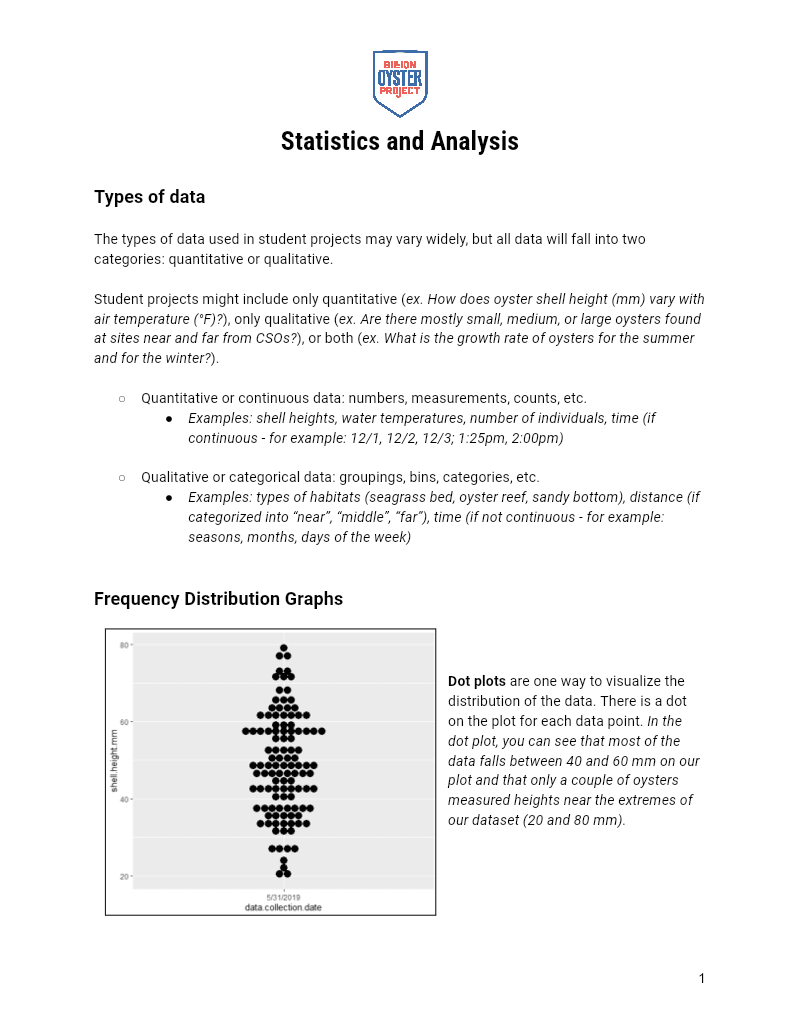
Summarize Your Data
Did you enjoy teaching this lesson?
Thanks! Any additional thoughts?
Materials & Quick Links
Sign up to access lesson content
Create free teacher credentials to access full lesson plans, downloadable materials, and teaching resources for your classroom.
Think Deeper About your Field Visit
Back in the classroom, students analyze their field observations, summarize their oyster data, and model the food web connections at their ORS site.
Lesson
:
ORS Food Webs
Did you enjoy teaching this lesson?
Thanks! Any additional thoughts?
Materials & Quick Links
Sign up to access lesson content
Create free teacher credentials to access full lesson plans, downloadable materials, and teaching resources for your classroom.
Asking Questions and Figuring Out Answers
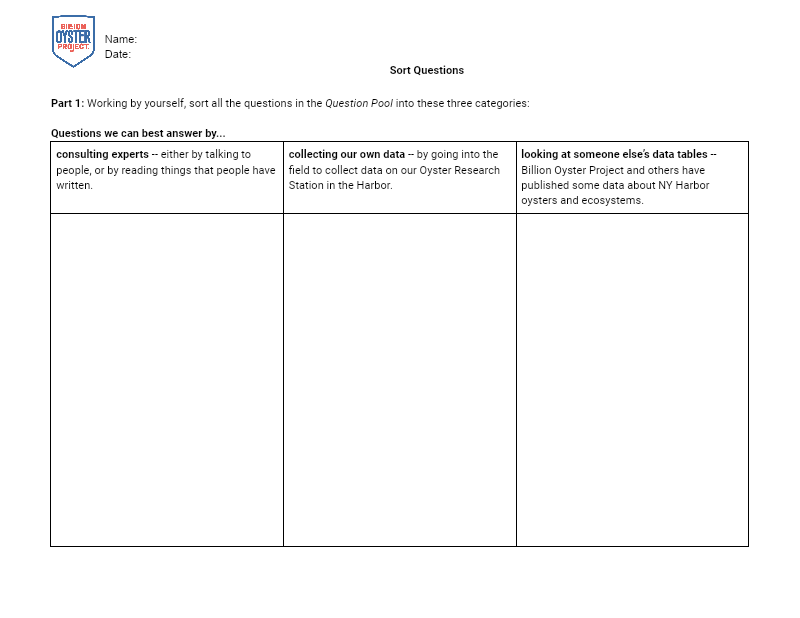
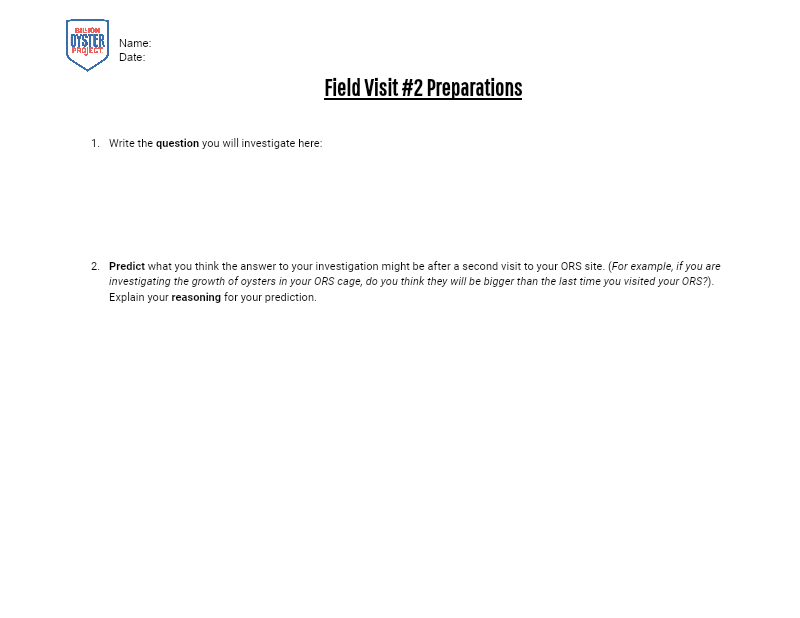
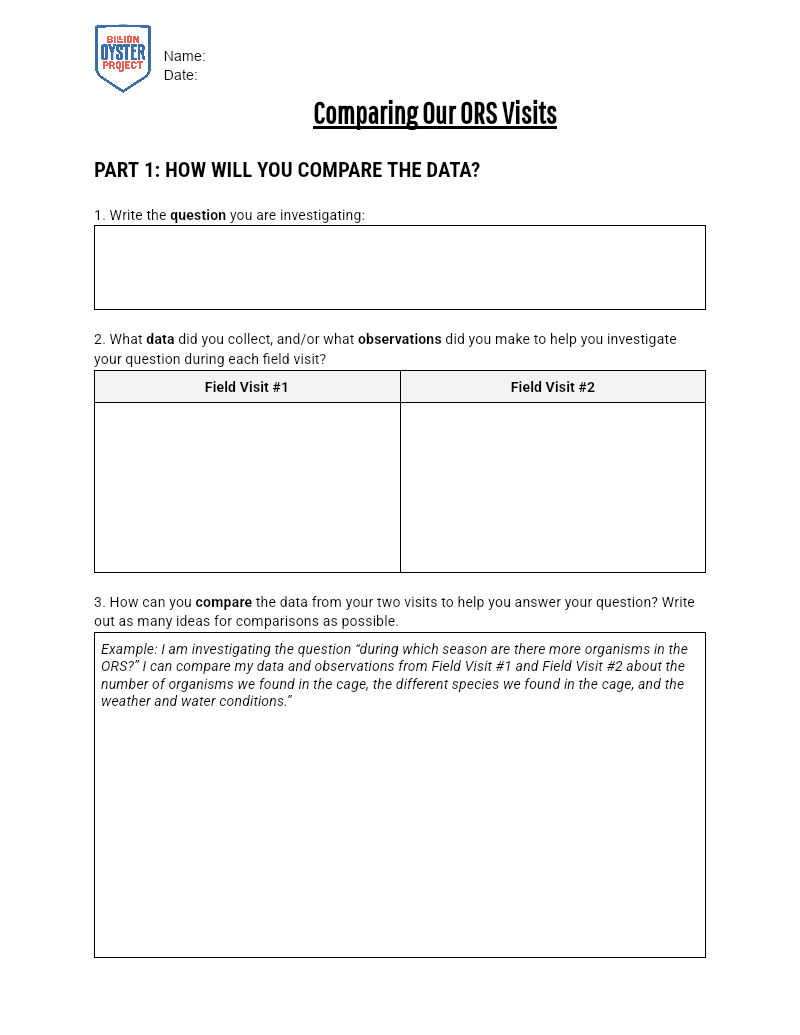
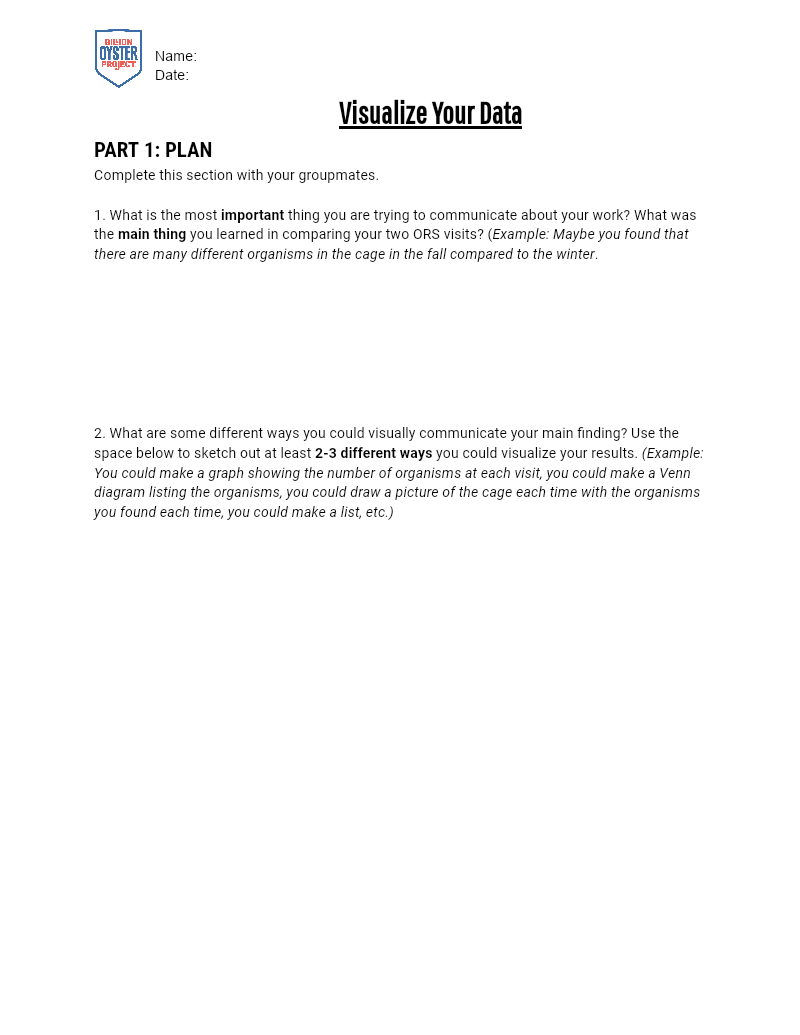
Students develop strong research questions, prepare for and complete their second ORS visit, and compare data across visits to figure out answers.
Lesson
:
What Makes a Great Question?
Did you enjoy teaching this lesson?
Thanks! Any additional thoughts?
Materials & Quick Links
Sign up to access lesson content
Create free teacher credentials to access full lesson plans, downloadable materials, and teaching resources for your classroom.
Asking Questions and Figuring Out Answers
Students develop strong research questions, prepare for and complete their second ORS visit, and compare data across visits to figure out answers.
Lesson
:
Preparing for Your Next ORS Visit
Did you enjoy teaching this lesson?
Thanks! Any additional thoughts?
Materials & Quick Links
Sign up to access lesson content
Create free teacher credentials to access full lesson plans, downloadable materials, and teaching resources for your classroom.
Asking Questions and Figuring Out Answers
Students develop strong research questions, prepare for and complete their second ORS visit, and compare data across visits to figure out answers.
Lesson
:
Identify a Focus Question
Did you enjoy teaching this lesson?
Thanks! Any additional thoughts?
Materials & Quick Links
Sign up to access lesson content
Create free teacher credentials to access full lesson plans, downloadable materials, and teaching resources for your classroom.
Asking Questions and Figuring Out Answers
Students develop strong research questions, prepare for and complete their second ORS visit, and compare data across visits to figure out answers.
Lesson
:
Compare ORS Visits
Did you enjoy teaching this lesson?
Thanks! Any additional thoughts?
Materials & Quick Links

Sign up to access lesson content
Create free teacher credentials to access full lesson plans, downloadable materials, and teaching resources for your classroom.
.png)